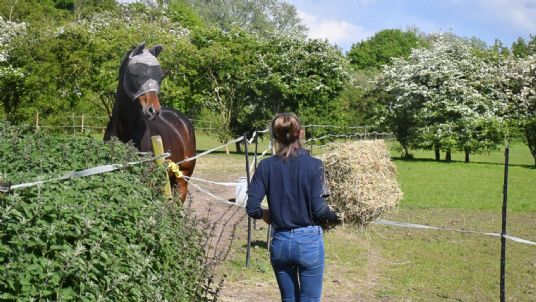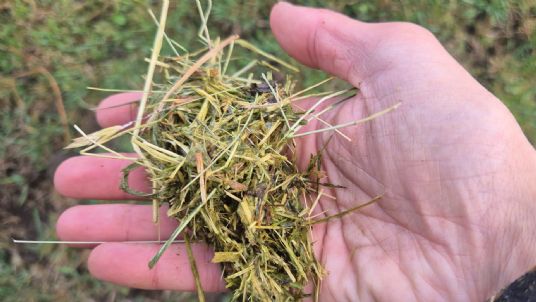
Do not feed new hay until it has been baled for at least 6 weeks - the same applies to haylage. Newly made hay continues to change after baling, and feeding it too soon risks loose droppings, a gassy or bloated gut, or even colic. Introduce it gradually, ideally mixing with old hay.
When old hay is running low, or is not very good quality, we will want to start on the new hay as soon as possible. But when can we start using new hay?
Newly made hay continues to under-go chemical changes even after it is baled. Traditionally, new hay was never fed to horses until Michaelmas at the end of September - when it was termed old hay!
In practice and under pressure of supplies, do not feed new hay until it has been baled at least 6 weeks and even then, keep a close eye out for any signs your horse is not happy with it. This could be loose droppings, bloated and gassy or even colicky. Not all horses are affected by new hay, and not all hay is baled equal, but it is not worth risking a gassy colic. Similar guidelines apply to haylage as well - you should wait until that has been baled and wrapped for at least 6 weeks.
If you are completely out of old hay and are not prepared to risk feeding new hay just yet, we have a wide range of solutions.
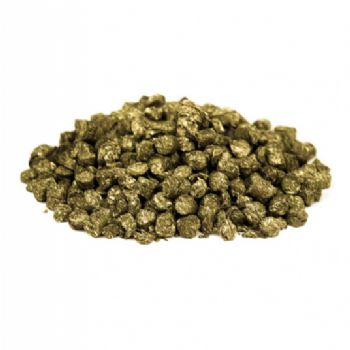
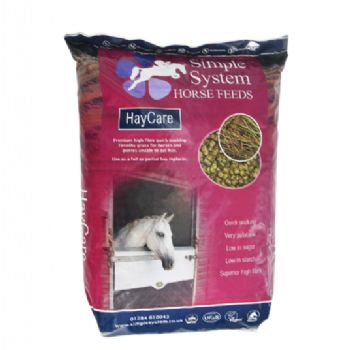
HayCare (our Timothy grass hay replacer for horses) provides a good alternative to tide you over as it is 100% Timothy grass, dried and pelleted, that has been harvested at a mature stage for naturally low sugars and high fibre.
For horses with good dentition, you can use the more textured but nutritionally similar Timothy Chop or Meadow Brix.
As a lower sugar alternative, consider Organic Lucie Stalks or Lucie Fibre Cubes. For the poorer doer or working horse that need a little more, Perform & Shine is the ideal higher nutrition blend of Cocksfoot and Timothy grasses, with a light coating of cold pressed liseed oil.
Another alternative is to allow your horse to have more grass if that is suitable for them. But don't leave your horse short of forage as long spells without eating can result in an increased risk of developing gastric ulcers and colic. Always offer a quality forage feed immediately before you work your horse, especially if coming in from a bare looking field.
If you require advice about short or long-term forage replacers, contact the Simple System Feed Line on 01728 604 008, or complete the feeding advice request form.