How to Body Condition Score your horse
Body condition scoring is a practical tool to help you objectively assess your horse’s condition. As a horse owner, whilst knowing their actual body weight is useful for medication, feeding rates and towing limits, whether they are underweight, overweight or just right is even more important for implementing suitable diets and adjusting workload or rugging.
The Henneke horse body condition scoring system was developed by American researchers in the 1980’s using the assessment of subcutaneous fatty tissue to rank horses from 1-9 where 1 is “emaciated” and 9 is “obese”. This method has been revised over the years and in the UK, it is more common to use a 0-5 scale where 0 is “emaciated” and 5 is “obese”. When half scores are used in the 0-5 scale, the two are very comparable.
Using the 0-5 scale, a horse body score of 2.5-3 is generally considered ideal. Horse body condition score can vary throughout the year, often mirroring grass availability.
In semi-feral management systems, equine body condition score varies on a circannual rhythm, peaking in the summer and dropping markedly by early spring*. Horses kept naturally or free ranging will use fat stores - built up in the summer - to see them through the harsher weather and times where grass is naturally lower in nutrition or harder to find.
Modern management has meant horses easily maintain body condition year-round; many can be described as “moderately fleshy” - a sign they are overweight - and obesity is a major welfare concern. Obesity places increased pressure on the joints, internal organs and increases the risk for metabolic conditions.
We should, where we can, allow for some level of natural variation in horse condition score to maintain healthy metabolic rate - developing slight fat cover in the autumn and becoming moderately thin through the winter should be seen as perfectly normal. The aim with our management and feeding should be to avoid any extremes, such as them becoming extremely fat or so thin they lose muscle mass.
How to Determine Body Condition Score for Horses
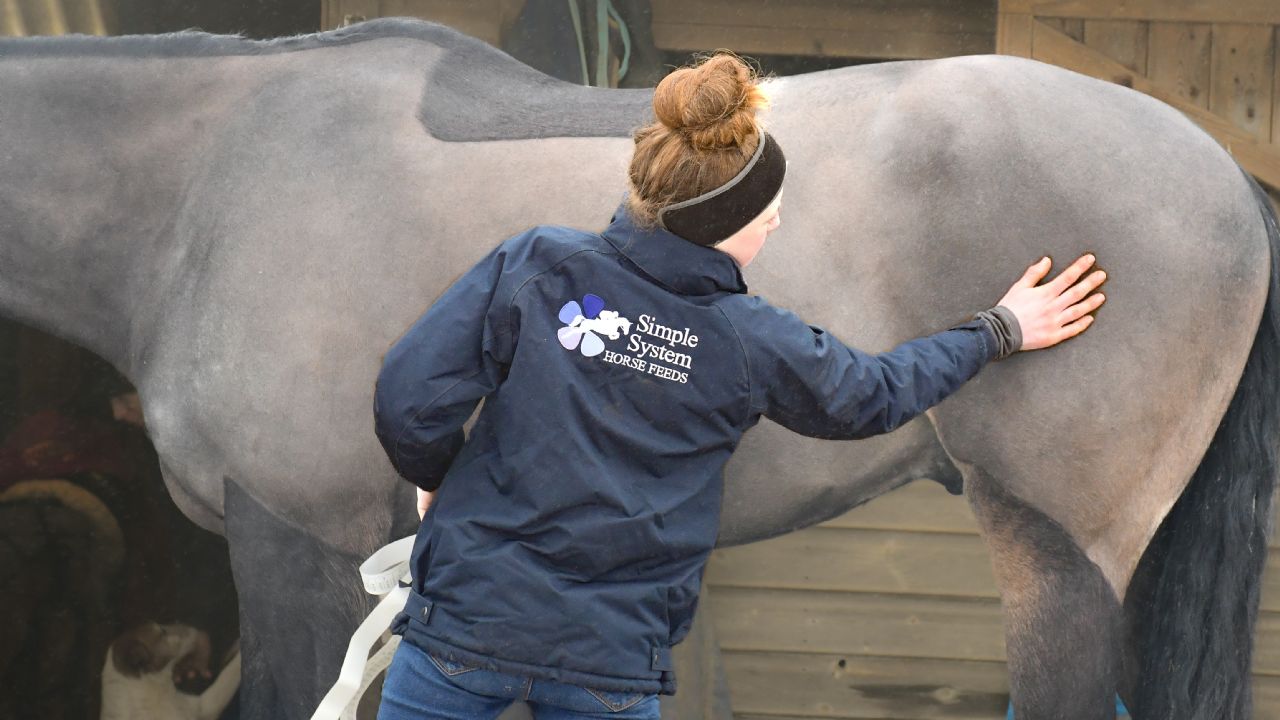
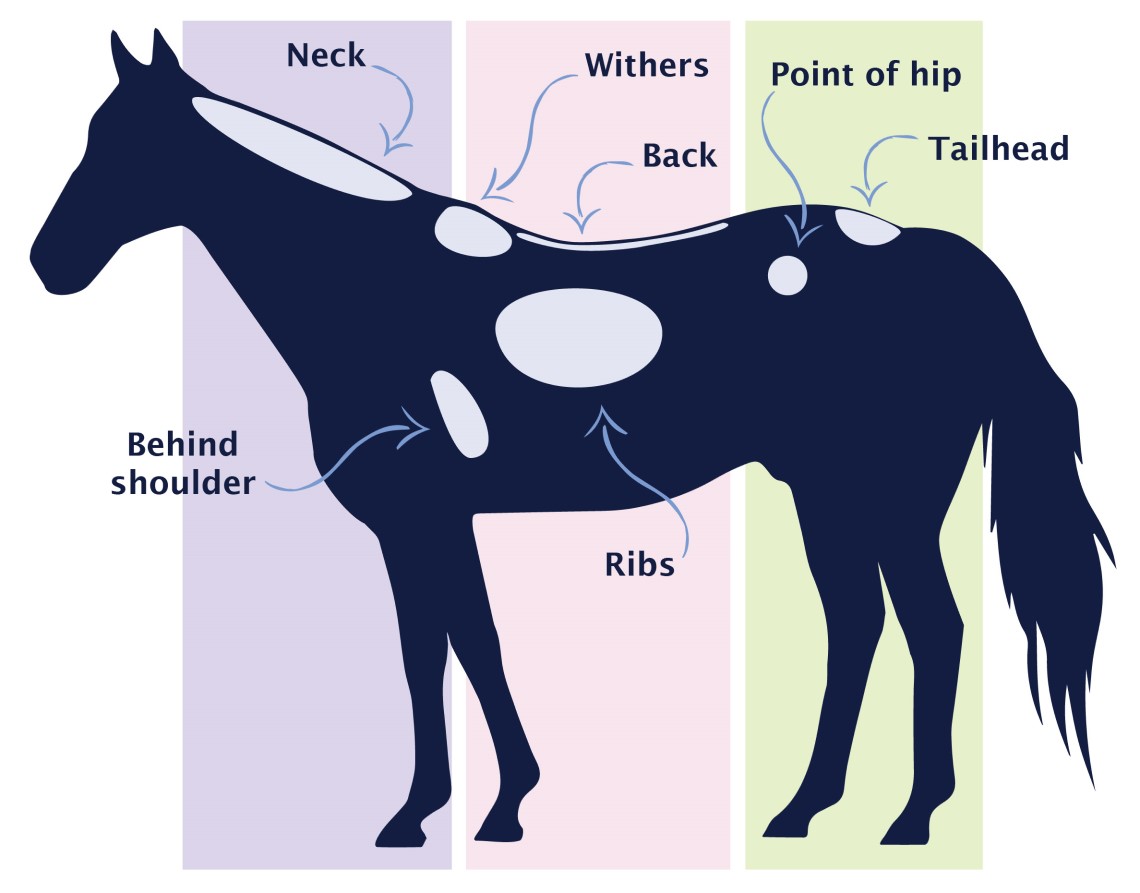
Stand your horse square on a firm, level surface before you begin. Using the assessment criteria below, focus on three key areas: the withers, shoulder and neck, the barrel and spine and finally the hindquarters.
Each part of the horse should be assessed individually with an average score given across the three areas.
A visual and hands-on assessment will give you the most accurate result. In general, muscle will feel firm under your hands compared to fat which is spongy to the touch.
Use body condition scoring in combination with a weigh tape, making sure to use the same tape each time for consistency. Record your results monthly to monitor changes in condition through the year.
Score 0
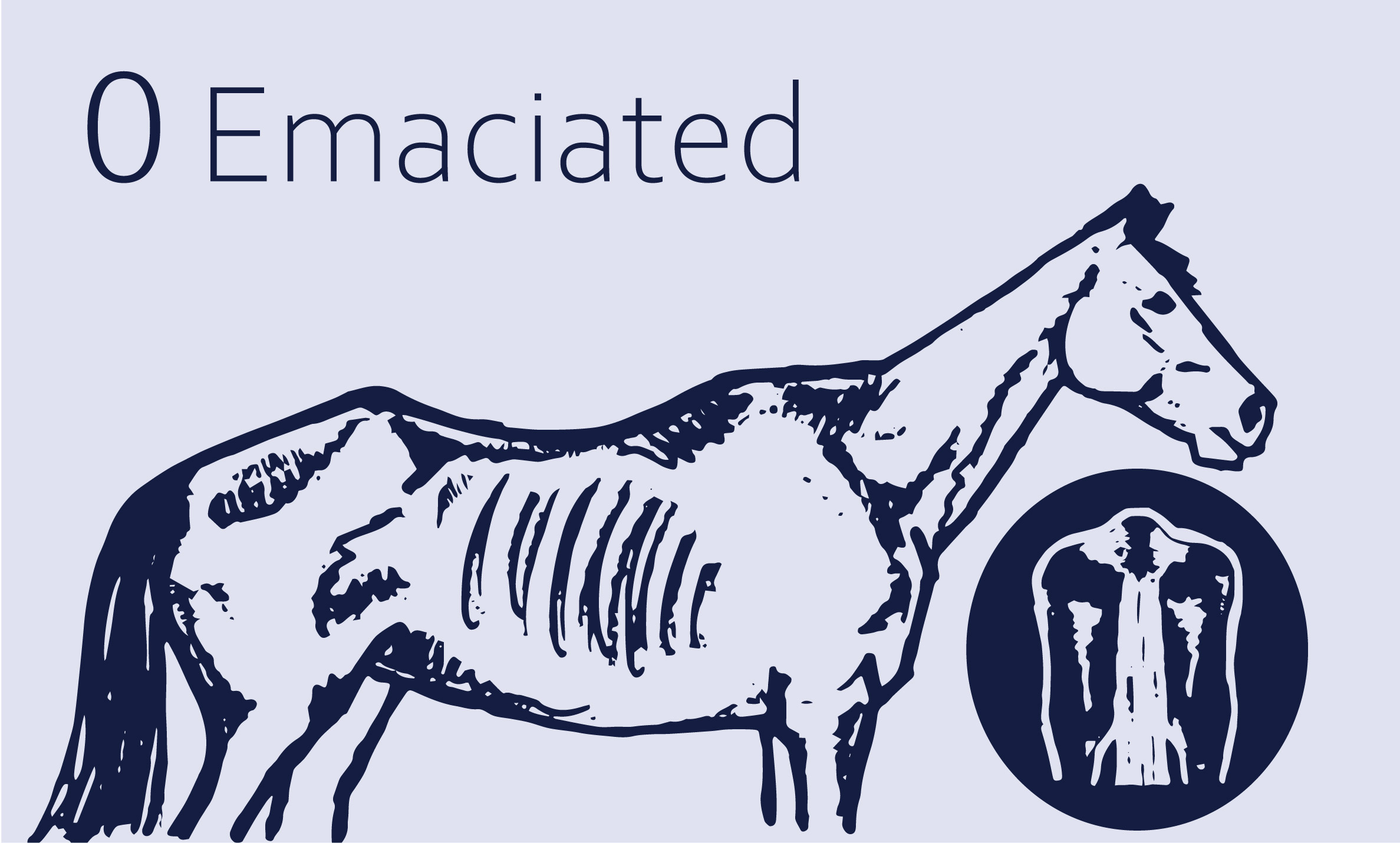
- Obvious ewe-neck, skin feels tight over bones and no fatty tissue can be felt.
- Ribs and bone structure easily visible with backbone and pelvis very prominent.
- Very sunken rump with deep cavity under tail and large gap between thighs.
Score 1
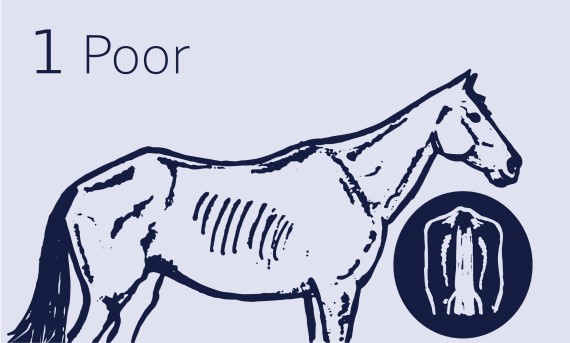
- Hardly any fatty tissue can be felt, little movement in the skin with a narrow, ewe-neck.
- Ribs visible with a prominent backbone, croup and tailhead.
- Sunken rump and angular hip bones, with a cavity under tail and gap between thighs.
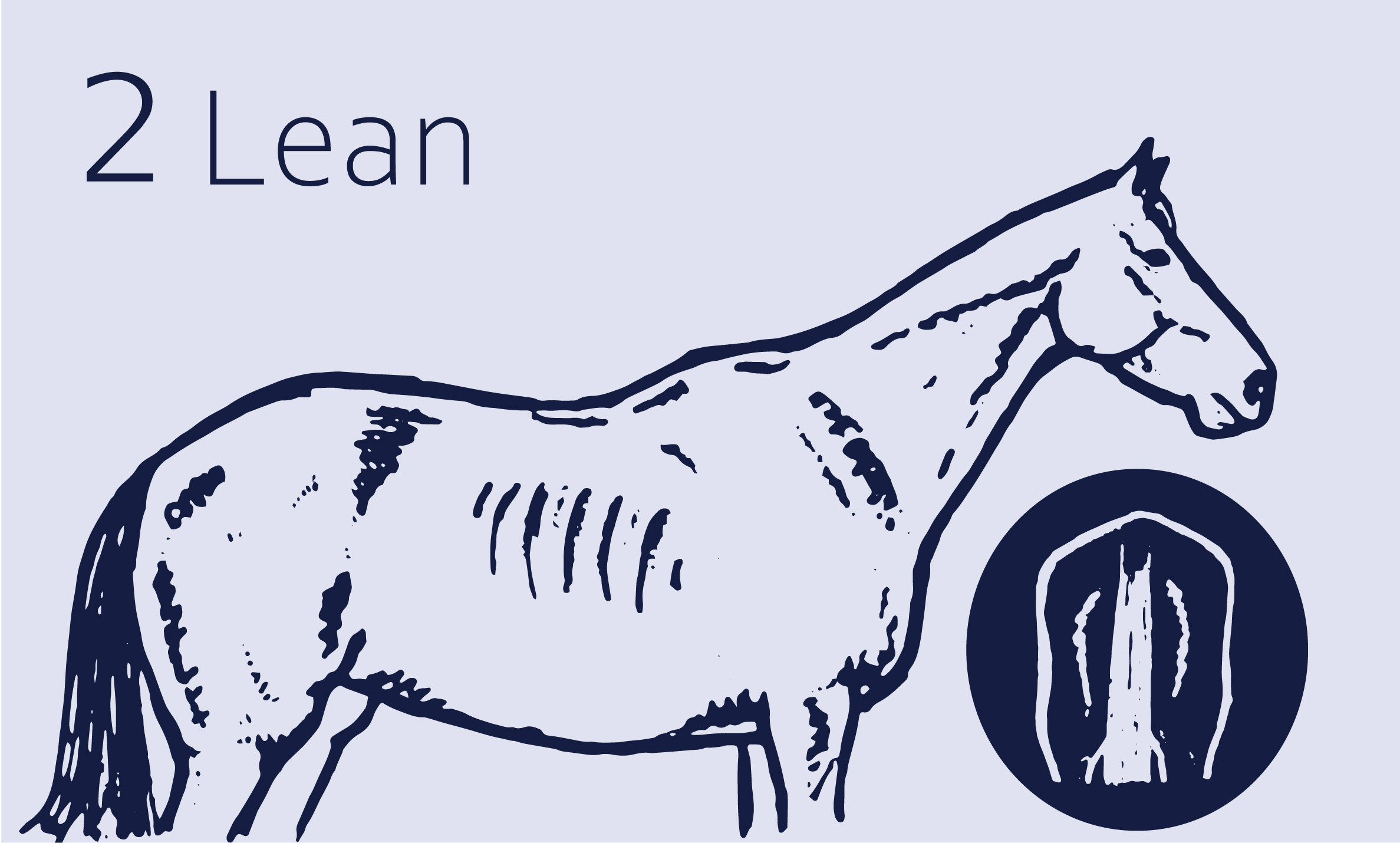
Score 2
- A very thin layer of fat can be felt under the skin, narrow neck with muscle structure clearly defined.
- Withers and shoulders accentuated, ribs and backbone slightly visible.
- Sloping rump with hip bones easily visible, small gap between thighs.
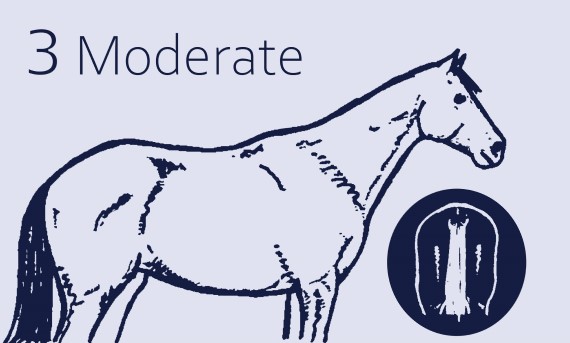
Score 3
- Soft, muscled neck with a thin layer of fat under the skin. Neck and shoulders blend smoothly into the body.
- The back is flat, spine well covered and ribs are not visible but can be easily felt.
- Rump gently rounded, hip bones are just visible but not angular.
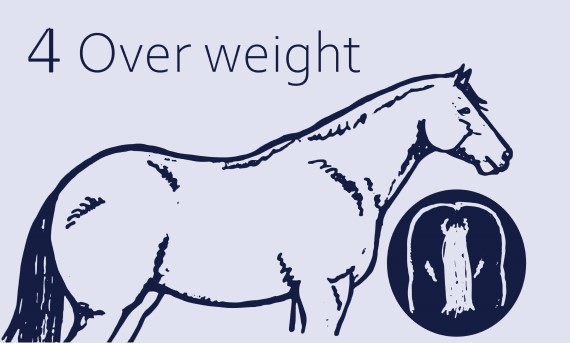
Score 4
- Spongy fat present along crest with muscles hard to discern.
- Fat present behind shoulders, shallow gutter along back and ribs difficult to feel.
- Well rounded rump which appears apple shaped from behind. Spongy fat present around tail head.
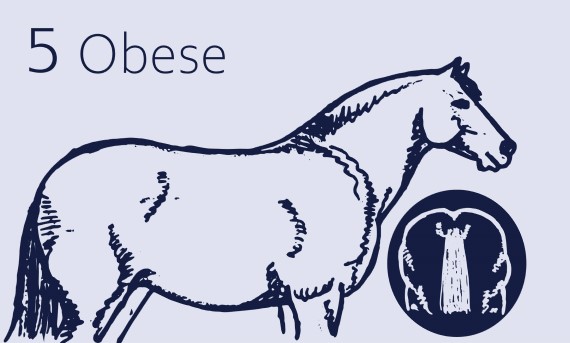
Score 5
- Firm, pronounced crest with fat pads. Muscle structure not visible.
- Bloated barrel like appearance with fat pads around withers and behind shoulders. Deep gutter along back and fat deposits over ribs.
- Bulging apple shaped rump, fat pads around tailhead and inner thighs pressed together.
Other Considerations
Native breeds and Cobs tend to store excess fat whilst Thoroughbreds are naturally leaner, but the “ideal” horse condition score remains the same. Any horse that is <2.0 or >4.0 likely needs altered management or feeding.
Sudden changes may require assessment of their health as many clinical conditions, aging or dental issues can contribute to sudden weight loss.
For nutritional advice, sensible management suggestions or a full Feed Plan, Simple System’s nutritional experts are happy to help. Contact the Feed Line on 01728 604 008, email info@simplesystem.co.uk or complete our advice request form.
References
*Górecka-Bruzda, A.; Siemieniuch, M.; Lansade, L.; Stanley, C.R. How Useful Are Existing Protocols in the Quick Assessment of the Welfare of Semi-Feral Horses? Pilot Study on Konik Polski Horses Living in the Forest Sanctuary. Animals 2024, 14, 8. https://doi.org/10.3390/ani14010008