Wait at least 6 weeks after baling before feeding new hay, then introduce it gradually, mixed with the old hay over 7-10 days. Feeding hay that hasn't cured can disrupt the hindgut, with spasmodic or gassy colic being a significant risk. Never leave your horse without forage whilst you wait, instead consider a hay replacer.
When Can You Feed New Hay to Horses?
While it is tempting to switch to new bales as soon as old supplies run low, feeding hay too early can lead to serious digestive issues. The general rule of thumb is to wait at least 6 weeks after baling before feeding new hay to horses.
Traditionally, new hay wasn't fed until Michaelmas (late September), at which point it was officially considered "old hay."
Why New Hay Needs to "Cure"
Newly made hay 'sweats'. This continues even after the hay has been baled.
During this period:
- Chemical changes occur: Sugar and moisture levels stabilise
- Microbial activity takes place: As the hay dries, bacteria and fungi settle
Risks of Feeding New Hay Too Soon
Feeding "green" hay, or hay that has not cured or dried for a long enough period, can disrupt the delicate hindgut of a horse.
Watch for these symptoms:
- Loose droppings or scouring
- Bloating and excessive gas
- Signs of colic. Spasmodic or gassy colic is one of the most significant risks associated with feeding new hay too soon.
Best Practices for Introducing new Hay and Haylage
Important Advice
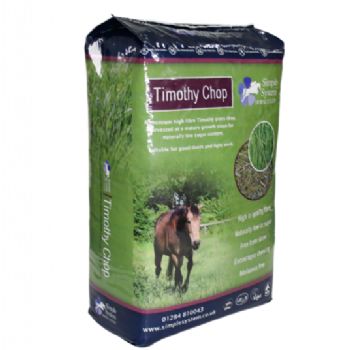
Never leave your horse without forage. Long periods without eating can lead to colic and/or gastric ulcers. If you are out of old hay and the new batch isn't ready, use a high-quality forage replacer like Simple System's HayCare, or Timothy Chop for horses with good teeth for chewing, to bridge the gap safely. You can learn more about other equine forage replacers at the foot of this article.
For Individual Horse Feed Advice
Contact the Simple System Feed Line for free, expert nutritional advice
- By phone: 01728 604 008 (9am to 5pm, Monday to Friday)
- By email: info@simplesystem.co.uk
- Request a Feed Plan online: www.simplesystem.co.uk/ask-a-question
Hay Replacement Options for Horses
Horses can require a forage alternative for a variety of reasons: a shortage in the hay supply, when 'new hay' is not yet ready to feed, as a higher energy or lower calorie option, due to ingredient sensitivities, or, in the case of older or dentally challenged horses, when they can no longer chew long stem forage.
Simple System offers a wide range of hay alternatives which are produced using only natural forage ingredients in a variety of product formats.
From pellets that are fed soaked as a mash, to forage blocks and chops / chaffs, we have your hay replacement needs covered.
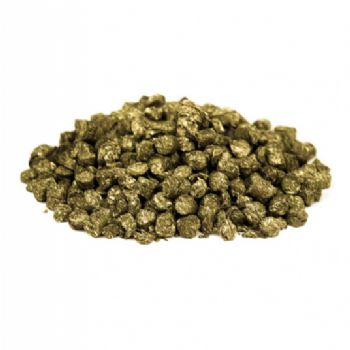
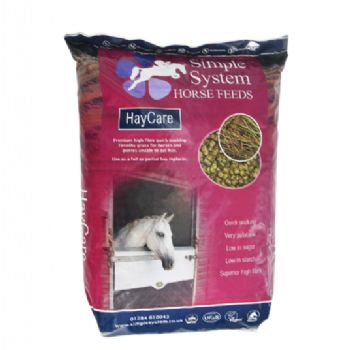
As with all Simple System feeds, the hay replacers are free from cereals and their by-products (including straw), molasses, soya, additives and preservatives. Some, such as HayCare, can be utilised as full hay replacers, others can be used to partially replace hay or haylage. HayCare is an ideal , quick-soaking hay replacer to bridge the gap whilst new hay cures.
| Product Name | Full or Partial Hay Replacer? | Product Format |
Ingredients |
Most Suitable for... |
| HayCare | Full or partial | Forage pellets for soaking | Timothy grass | Providing nutrition likened to good quality, high fibre hay. Suitable for all equines, including older horses with poor dentition. |
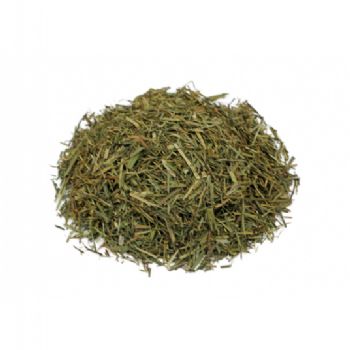
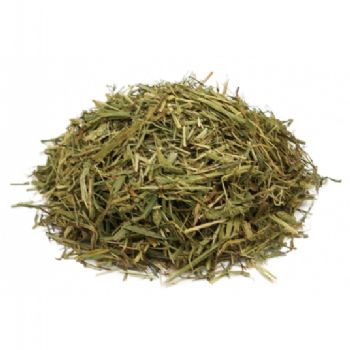
| Timothy Chop | Full or partial | Chopped forage | Timothy grass | Offering high fibre and naturally low digestible energy. Suitable for all equines with good dentition for chewing. |
| Organic Lucie Stalks | Partial | Chopped forage | Lucerne | Providing a very low sugar option. Best for very good doers for use as a lower calorie option than the hay it is replacing. |
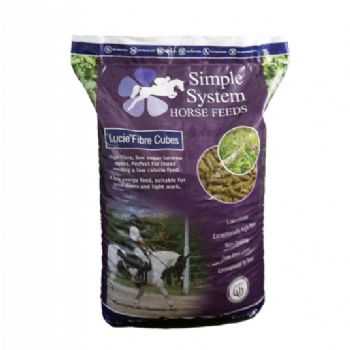
| Lucie Fibre Cubes | Partial | Forage pellets for soaking | Lucerne | A soakable alternative to Organic Lucie Stalks. Ideal for older horses, those with poor dentition and where a mash format is preferred. This feed soaks to a bulky mash and large buckets can be left out for horses to 'graze' upon. |
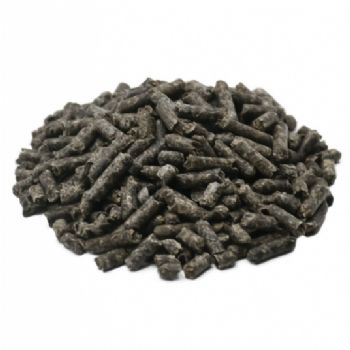
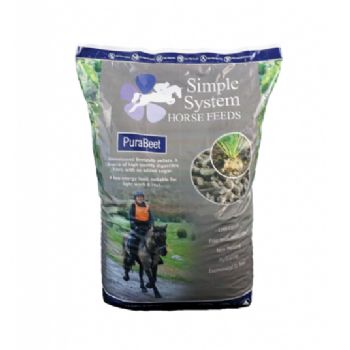
| PuraBeet | Partial | Pellets for soaking | Beet pulp | The most economical option as it soaks up to 5 times the volume of water. To make a hay replacer mix 1/3 PuraBeet with 2/3 Lucie Fibre Cubes, Blue Bag Grass Pellets or Sainfoin Pellets. |
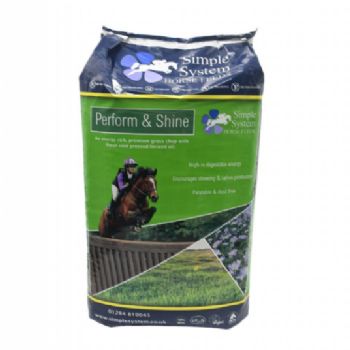
| Perform & Shine | Partial | Chopped forage | Cocksfoot and Timothy grasses with cold-pressed linseed oil | Best for poorer doers or fussier feeders for use as a higher energy / calorie option than the hay it is replacing. |
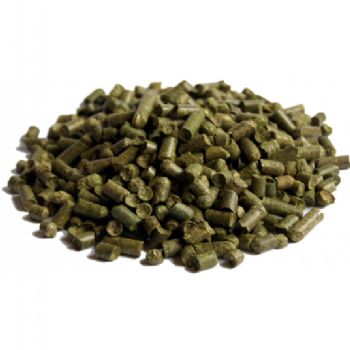
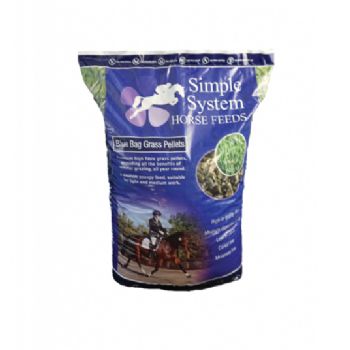
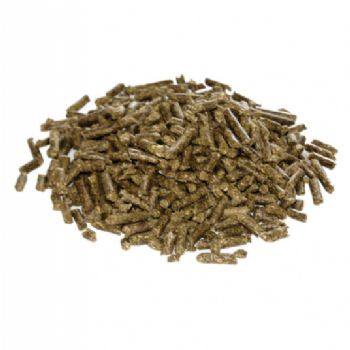
| Blue Bag Grass Pellets | Partial | Forage pellets for soaking | Timothy grass | Suppliying nutrition levels likened to summer grazing. Feed as a partial hay replacer for poorer doers requiring more calories, or mix with PuraBeet to create an economical hay replacer with nutrition that is more similar to hay. |
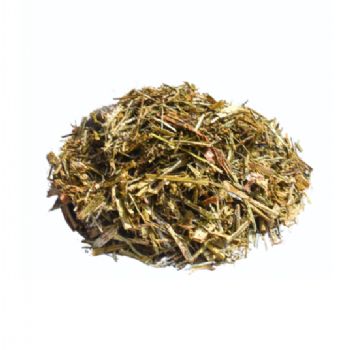
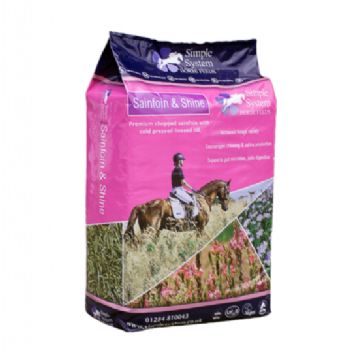
| Sainfoin & Shine | Partial | Chopped forage | Sainfoin with cold-pressed linseed oil | Most utilised for horses with sensitivities to grass or lucerne. Also useful for adding variety to support hindgut microbes. |
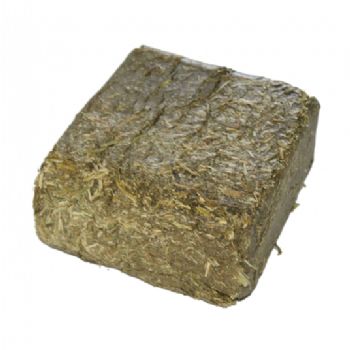
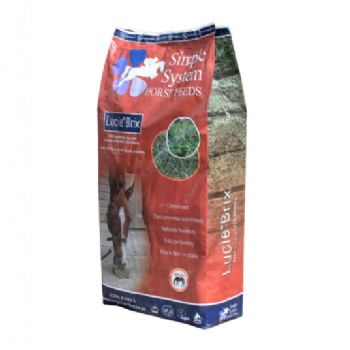
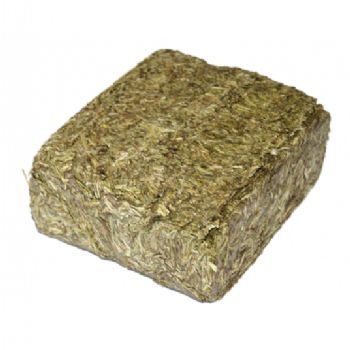
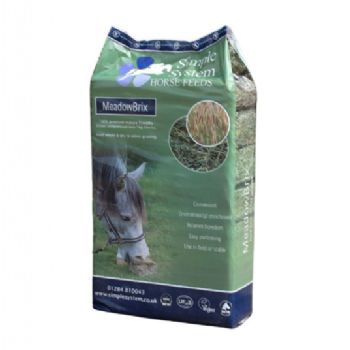
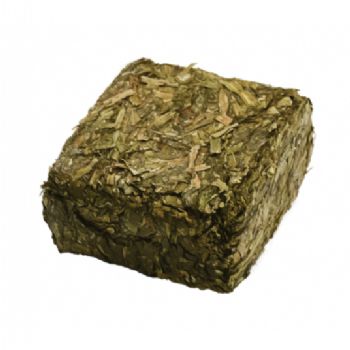
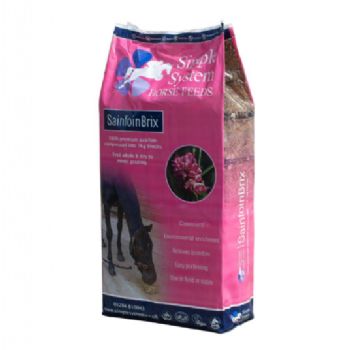
| Forage Brix | Partial | Chopped forage compressed into 1kg blocks | Timothy grass (MeadowBrix), Lucerne (LucieBrix) or Sainfoin (SainfoinBrix) | Easy, convenient feeding plus enrichment. Feed at ground level in the field or stable. Often loved by livery yards as a 'less messy' option than hay. |