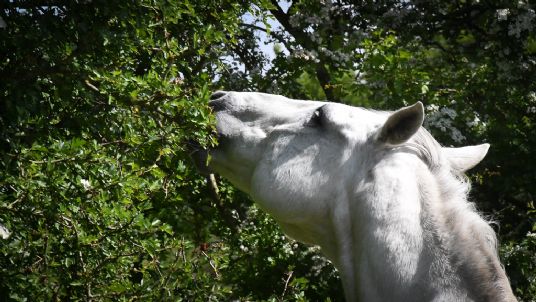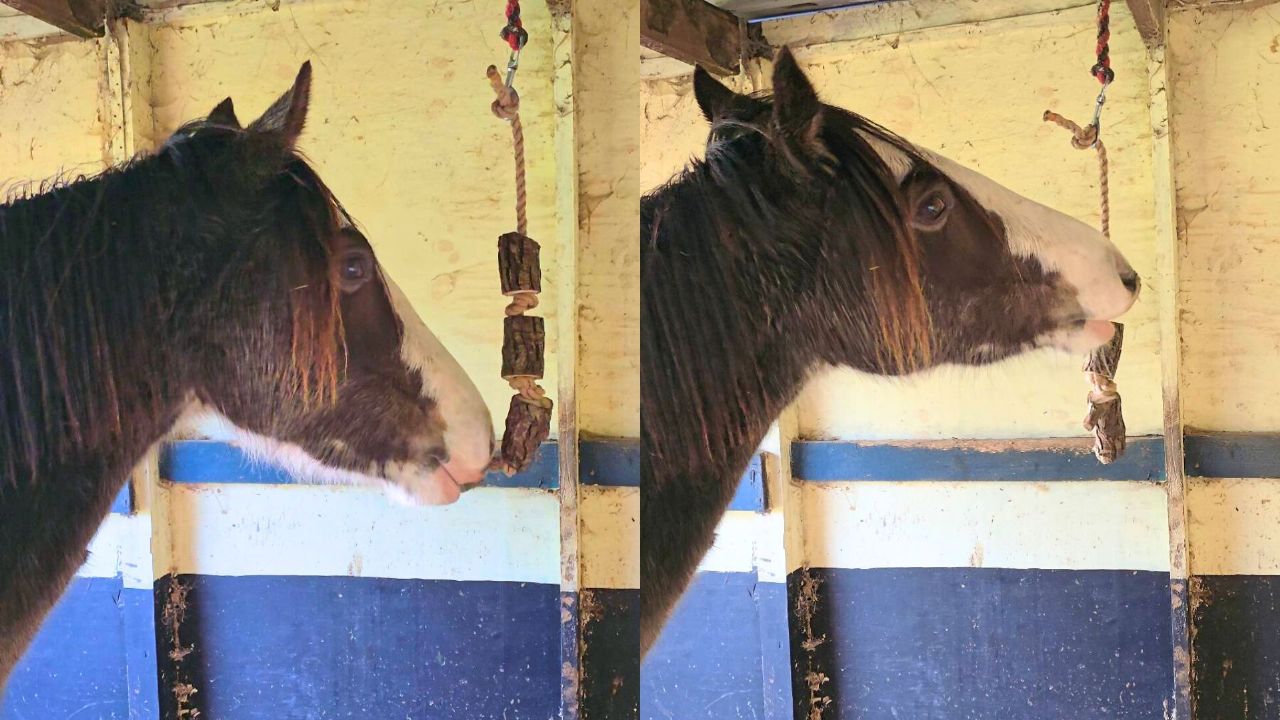
Fibre — and a good variety of it — is essential for all equines, especially donkeys, who have evolved in harsh, arid conditions with little lush vegetation. In the natural environment, browse is found in shrubs, bushes and, near watercourses, trees.
In domestic settings, browse is often limited to the point of being non-existent. This can be addressed quite straightforwardly:
-
Take browse to the horse or donkey. Willow branches, fruit tree prunings, hazel hedge clippings and so on, can all be offered. If they are not accustomed to any of these, start with small amounts and monitor their reaction.
-
Take your horse or donkey to the browse. Take them in hand to pick at hedges, low tree branches and so on. Make sure you can identify what you are offering, as some garden plants are toxic, such as laburnum, certain maples and sycamore.
-
A long-term option is to grow their own. Plant species-rich hedges and trees, and allow scrub to establish in their fields. For the first few years the hedge will need protecting, but once established it can prove to be an effective barrier as well as a haven for wildlife, while providing shelter and browse for the horses.
Not all trees and shrubs are beneficial. Avoid those known to be poisonous. Nibbling a few oak leaves may not appear to be too problematic, but eating significant amounts of acorns really can be, so take great care with oaks.
Blackthorn, although native, has thorns so hard and sharp they can penetrate the hoof wall and are notorious for introducing infection. The famous artist Sir Alfred Munnings was blinded in one eye due to a blackthorn.
Never plant sycamore as it can be highly toxic - learn more about atypical myopathy here.
Hawthorn makes an excellent hedge and has pretty blossom and fruits — haws — loved by birds as well as horses. Dogwood, field maple, goat willow and dog rose are all good additions to a basic hawthorn hedge.
To ensure you plant species able to thrive in your soil, consult a specialist hedging supplier. Your hedge will need cutting every two years to keep it thick and healthy.