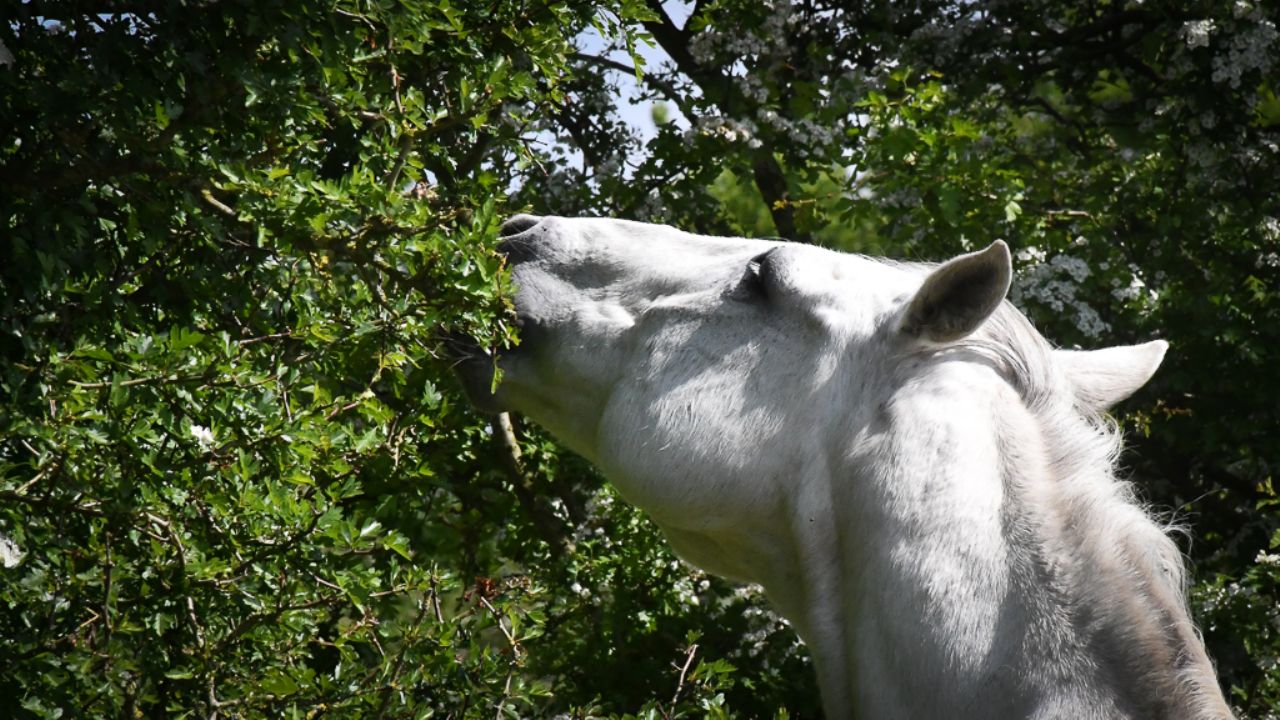
Horses love hedges! They have many benefits, from providing shelter, to offering environmental enrichment and dietary supplementation.
This week is 'National Hedgerow Week' (which runs from 5th -11th May 2025) and according to the campaign administrators, The Tree Council, hedgerows form the UK's largest wildlife habitat - and this habitat needs our help.
Even making small or simple changes can make a notable difference to nature. Here are some suggestions for horse owners keen to improve (or add in) hedgerows.
Make use of any fenced off corners. Fencing corners is a good idea for safety as it avoids horses becoming 'boxed in' or 'trapped'. The fenced off area may be small, but not too small as to consider planting a beneficial tree or shrub! Wild dog rose or hawthorn are two ideal options.
Allow existing hedges to grow a little taller. As an alternative to cutting back yearly, try cutting back every other year, or even trim one side one year, and the other side the next. NB hedge cutting should be avoided altogether during bird nesting season - from March to August in the UK.
Identify a good specimen and allow it to grow on as a tree. Hawthorn, hazel and field maple are all beneficial for nature, are palatable for horses and make attractive specimen trees.
For more ideas or information visit https://hedgelink.org.uk/campaign/national-hedgerow-week/
For free feeding advice for your horse, call the Simple System Feed Line on 01728 604 008 or email info@simplesystem.co.uk
