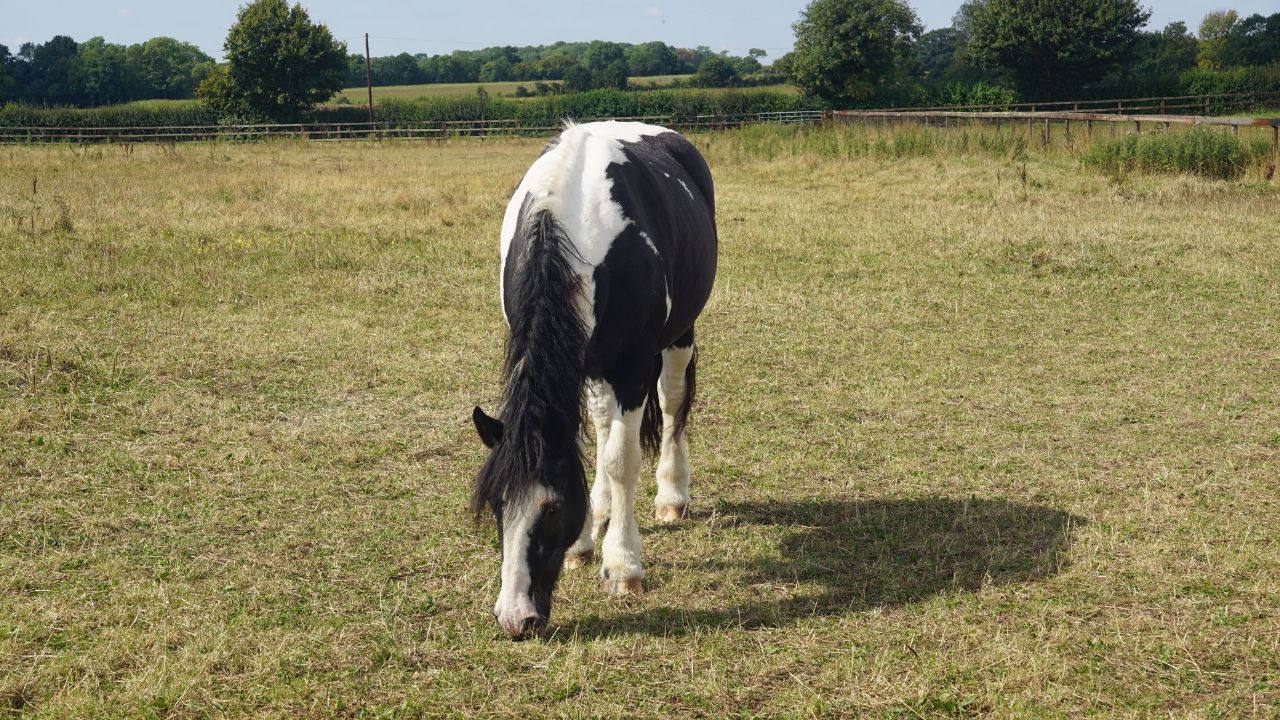
Grass that is not growing due to drought is still alive and making sugar in the sunshine and as the grass is unable to grow due to the lack of rain, sugar builds up in the base of the plant. This can be a problem for horses sensitive to sugars, especially those who are laminitis prone, have Insulin Resistance (IR), PPID/Cushing's Disease or Equine Metabolic Syndrome (EMS).
There may not be much grass in some paddocks, but what the there is, may not be appropriate. For such horses, it is sensible to offer alternative, low digestible energy forage sources out in the field.
Options such as Organic Lucie Stalks and Lucie Brix can be particularly useful for those with good teeth as they increase chewing time whilst offering additional fibre and quality protein.
Voluminous soaked feeds such as HayCare, PuraBeet and Lucie Fibre Cubes are very popular, especially during warm weather as they aid hydration. They are also the best option for older horses and those who quid or struggle to chew.
MetaSlim can be added, either dampened with a chop or mixed into soaked feeds for further dietary support for horses and ponies who are prone to laminitis, fat pads or crests. Movement should also be encouraged. Fencing a track, or longer strip sections rather than keeping traditional 'square' paddocks, can help to increase activity. Spreading out different forage options so that they can eat on the move is also a simple but effective way to keep your horse moving. Consider allowing access to standing hay. Whilst it may seem an odd suggestion to offer more grazing to sugar-sensitive horses, mature grass will be higher in fibre, filling them up quicker and as sugar is stored in the base of the plant, only eating taller grass reduces sugar intake and will be nutritionally more akin to hay. If you have any questions, or would like to discuss our range of feeds, contact the Feed Line on 01728 604.008, or head to the 'Feeding Advice' section of the Simple System website.