Help us to showcase our UK Native breeds. This week the Rare Breeds Survival Trust published the 2024-25 Watchlist. To the surprise of many the Section B Welsh Pony was added to the 'At Risk' category due to a decline in stud book registrations. We are lucky to have such a diverse and versatile range of natives in the UK and it is a real concern to have another breed added to the already extensive 'At Risk' and 'Priority' watchlists.
Let's show the world just how wonderful our rare breeds natives are! Simply share an image or video of your horse on your own social media adding the hashtag #uknativeshowcase. Don't forget to tag us (@simplesystem) for a chance to have your horse or pony featured on our socials!
The other 'At Risk' UK native equines are:
- Clydesdale Horse
- Dartmoor Pony
- Fell Pony
- Highland Pony
- New Forest Pony
- Shire Horse
With the 'Priority' UK native equines being:
- Cleveland Bay Horse
- Dales Pony
- Eriskay Pony
- Exmoor Pony
- Hackney Horse
- Hackney Pony
- Suffolk Punch Horse
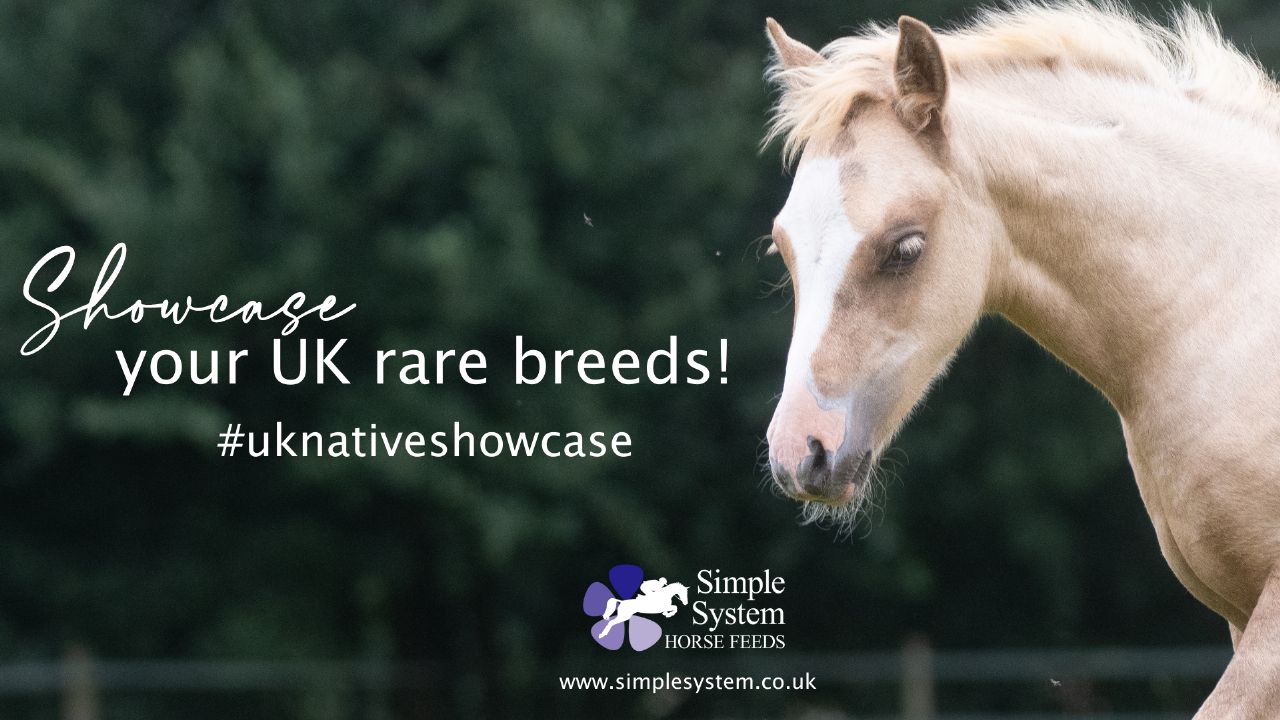
Image - Section B Welsh Pony foal, Zach, owned by Simple System Horse Feeds distributors, Gordon & Sophie Radcliffe.
Should you require feeding advice for your native horse or pony please contact our Feed Line on 01728 604 008 or complete our feeding advice request form by clicking here.