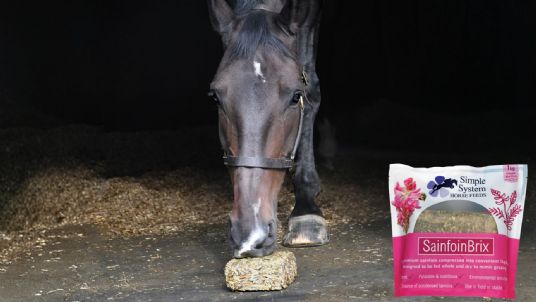
These high fibre, low calorie cubes are made from 100% pure lucerne which has been dried slowly and naturally in the sun. Stalk predominates over the more nutritious leaf, so this is an ideal feed for good doers, horses on box rest or in very light work and not needing high levels of nutrition. Crucially, this feed is very low in sugars and of course, we have added nothing to it. Protein levels are sufficient for maintenance of healthy muscles and internal organs so if included as part of a weight reduction programme, will ensure that it is fat your horse sheds, not vital muscle bulk.
Lucie Fibre Cubes can be fed just like any other high fibre cube but you have the reassurance of knowing that there is nothing unnatural, no cereal by products, no pulses, no straw, no non-forage fibre, certainly no molasses and nothing that can cause your horse any sort of sensitivity.
Feed them dry, mixed with a suitable chop, dampened or in a feed ball. It is also suitable for use as a partial hay replacer. For elderly or dentally challenged horses, they can be fed soaked to make a tasty and sustaining mash that can be easily eaten and fed in considerable amounts.
Typical analysis: Crude Fibre 37.5%, Crude Protein 10.1%, Oil 1.9%, Ash 8.2%, Total sugar 4.2%, DE 8.92 MJ/Kg