Digestion starts in the mouth. In order to eat efficiently, everything needs to line up correctly - the grinding surfaces need to align in order to chew and break down their feed and forage.
How does the horse's jaw work?
The horse has muscles to retract the lower jaw, but not to move it forward. When the horse is grazing, their head is down when eating and the lower jaw slips slightly forward. So, for a horse with a well conformed mouth;
- The lower jaw slides slightly forward
- The upper and lower teeth align correctly
- Teeth wear evenly as the horse chews
This position allows the horse to grind forage efficiently, just as nature intended.
What happens when the horse eats above ground level?
When a horse eats with their head raised (for example, from haynets or high buckets):
- The lower jaw slips backwards
- Teeth no longer align correctly
- Uneven wear of the grinding surface (crown) often causes sharp edges or hooks on their teeth
- Horses can experience pain or discomfort in the mouth
- Horses may not be able to chew effectively and you may note that they are quidding hay or feed, which can lead to loss of weight and condition.
As a horse owner, how can you practically feed your horse from ground level?
- Feed forage from the floor wherever possible. In the field, placing hay or haylage piles on a rubber matted area can help to avoid hay been trodden into poached or muddy areas. This is also beneficial in dry conditions as it can help minimise the ingestion of sand and soil, reducing the risk of sand colic.
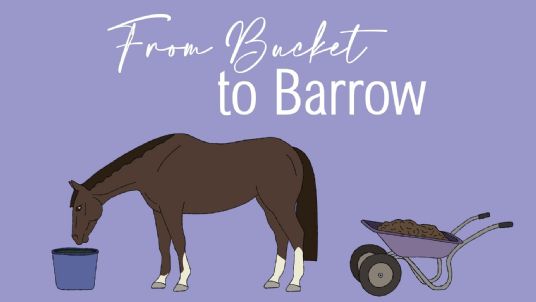
- Avoid using 'over the door' buckets for feeds. Instead, use a feed bucket at ground level. If your horse has a habit of tipping their feed bucket, simply placing it inside a tyre in the stable can be of great help.
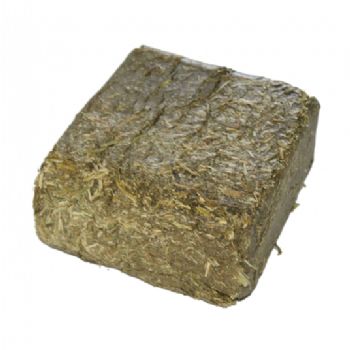
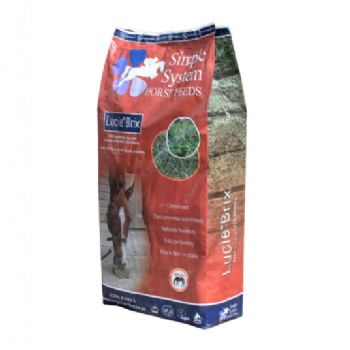
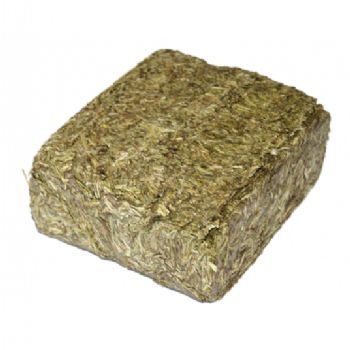
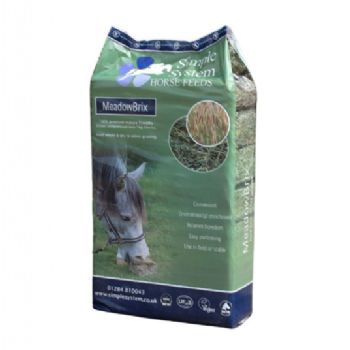
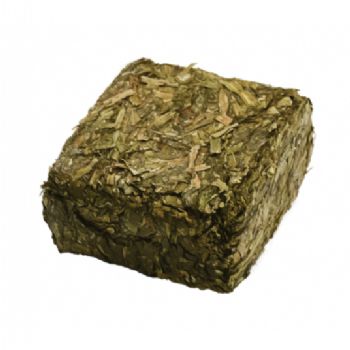
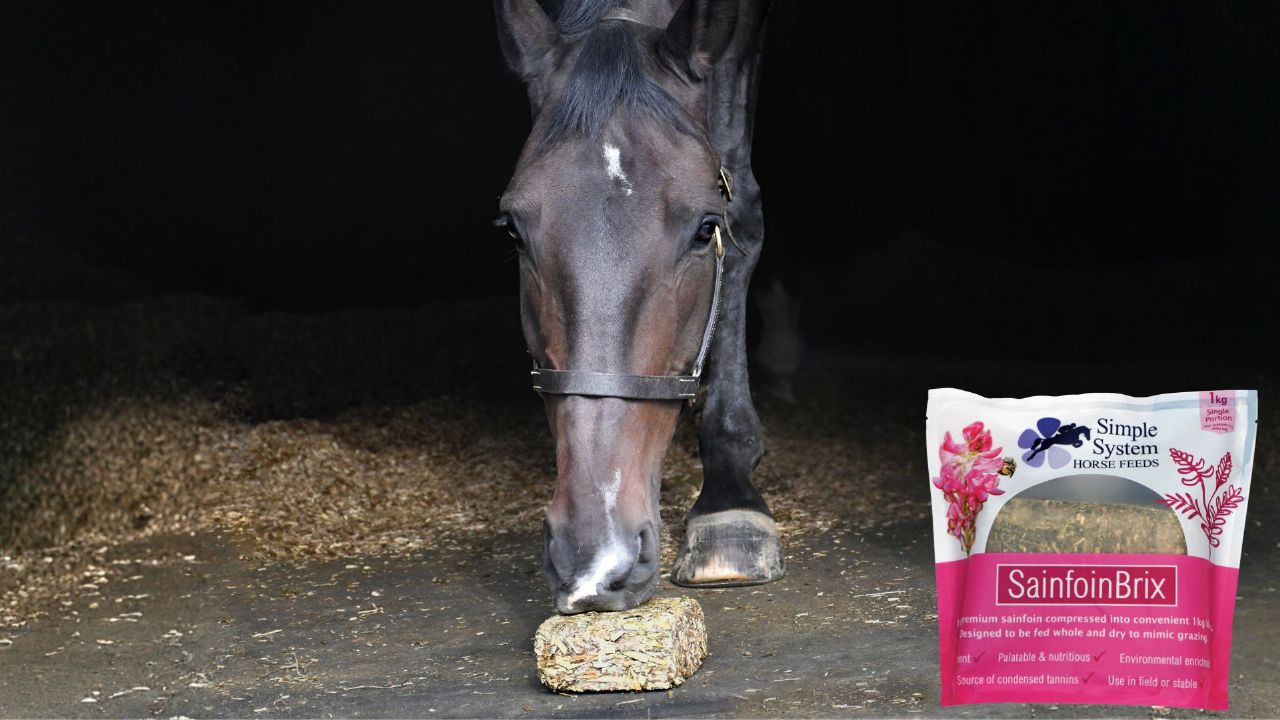
- When using compressed grass blocks such as Simple System's Brix, feed them whole and dry from the ground. Avoid hanging them in nets.
The take home message...
Feeding from floor level helps maintain correct jaw alignment, promotes more even tooth wear, and supports healthy digestion. Whenever possible, allow your horse eat naturally, as nature intended — head down, teeth aligned, and chewing comfortably.
We also recommend that your horse is seen regularly (every 6 to 12 months) by a qualified Equine Dental Technician. You can find a list of qualified professionals on the British Association of Equine Dental Technicians (BAEDT) here.
Horse struggling to chew even when eating at ground level?
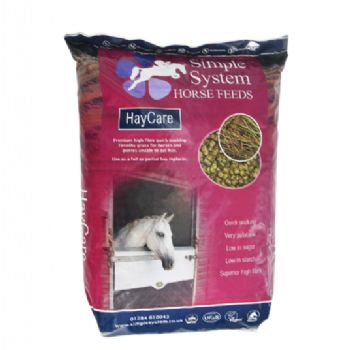
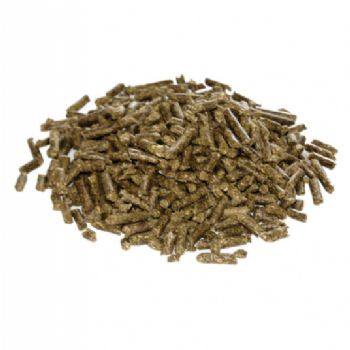
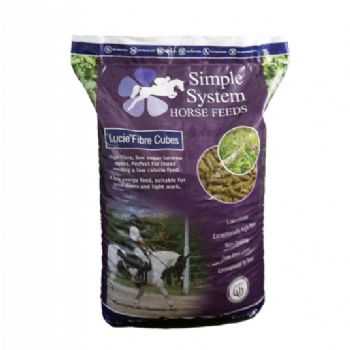
Your horse may require an easier to manage soaked hay replacer such as Simple System's HayCare or Lucie Fibre Cubes. For free feeding advice contact the Simple System Feed Line on 01728 604 008 or complete the online enquiry form here.