Ragwort - a menacing paddock plant!
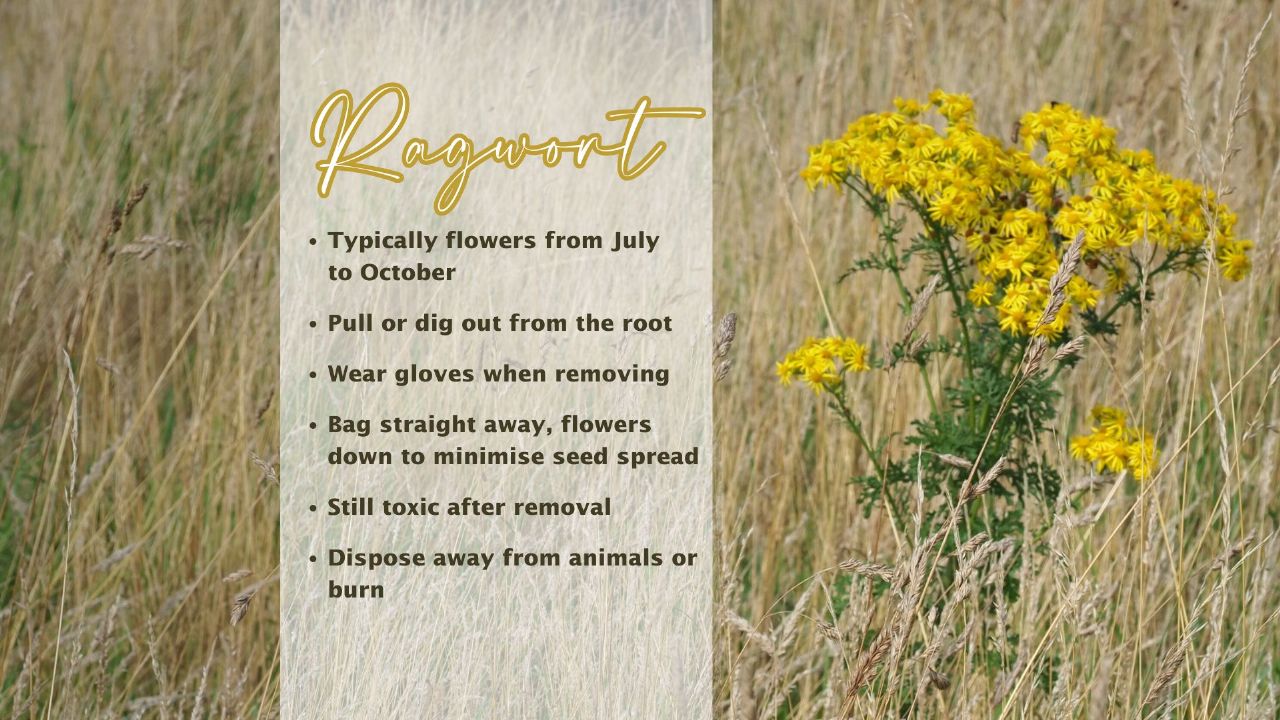
The dreaded ragwort is flowering now and is easy to spot. It is also starting to go to seed, so any not removed posthaste will spread through its wind-borne seeds.
The safest way to remove it from horse pastures is to pull or dig it up, hopefully getting all the roots at the same time. Wear gloves and a face mask to protect yourself from the sap and pollen. Gather it into re-used feed bags and put the plants flowers down, roots up, to avoid inadvertently spreading seeds. Put pulled plants straight into the bags – don’t carry them around as this risks spreading seeds.
Once you have collected your ragwort, get rid of it. Take it to the local tip or burn it straight away, but don’t just leave it. It will continue to develop seeds even though you pulled it up and the seeds will spread far and wide on the breeze.
Absolutely ensure that no animal can get near it, as once pulled up, it becomes palatable but no less poisonous. Ragwort poisoning builds up over the horse’s life, gradually destroying its liver.