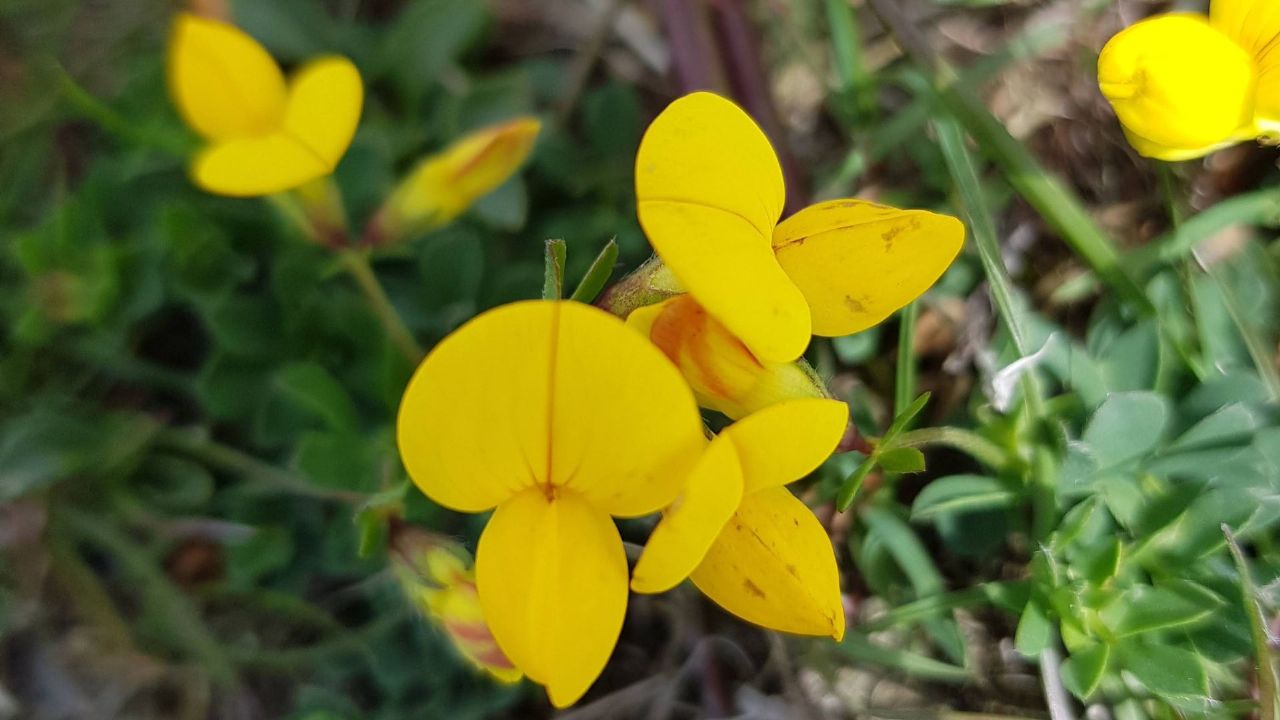
This is common Birdsfoot trefoil, although it is sometimes referred to as 'eggs and bacon'. It's an attractive wildflower, native to the UK. The small, bright yellow flowers can usually be seen between May and September in various grassland habitats, from high up on the moors to the lower coastal areas.
As well as being a valuable food source for pollinators like the Common Blue butterfly, Birdsfoot trefoil is a plant that equines will naturally browse as they graze. It has many positives for horses. So much so, we include it in our Meadow Forage Pellets- a unique forage feed grown as a herbal ley, with species having been chosen specifically for equines.
Although Birdsfoot trefoil is a low growing plant reaching 20-30cm (but in my moorland fields it tends to grow just a few inches off the ground), it is deep rooting. This helps fix nitrogen, improves soil structure, and it allows the plant to draw minerals from deeper in the soil. A valuable plant for nature, and for our horses.
Birdsfoot trefoil is a mineral rich forage legume. It offers diversity in the equine diet, which supports gut microbes, and it also contains valuable condensed tannins, which can support the digestion of protein. There are also numerous other reported benefits more specifically linked to livestock. A quick google will provide insight for those keen to learn more.