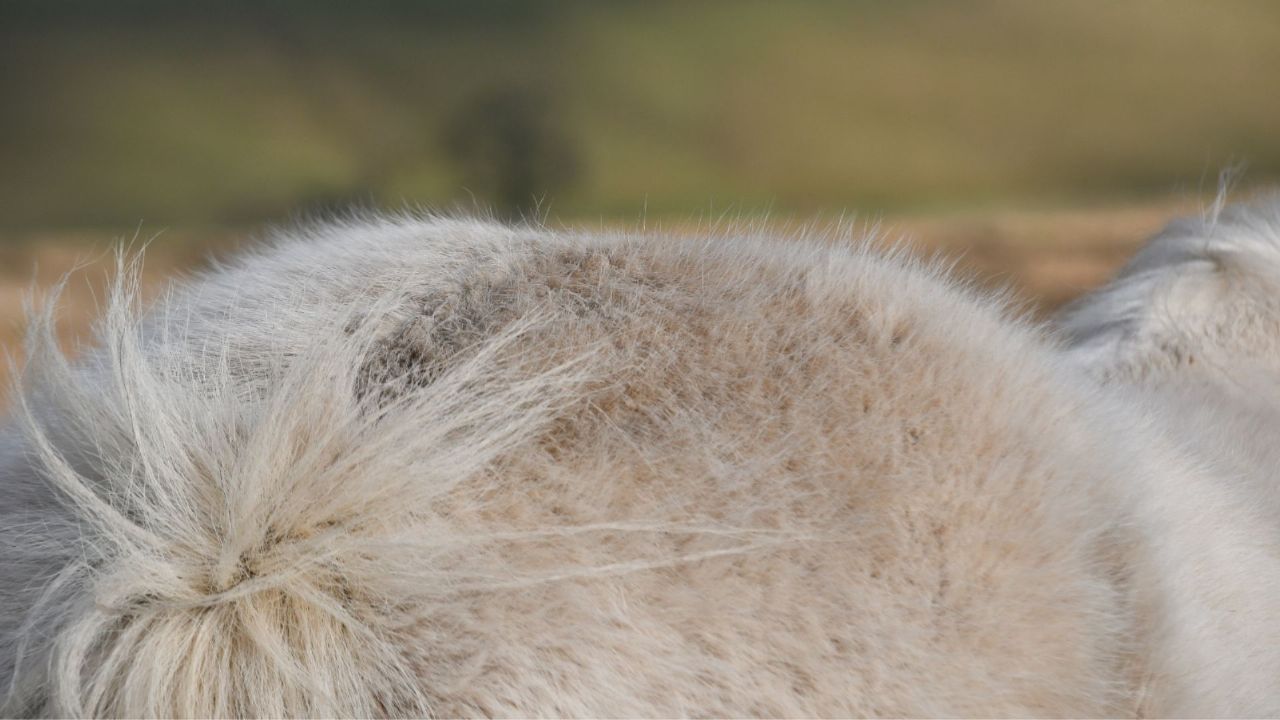
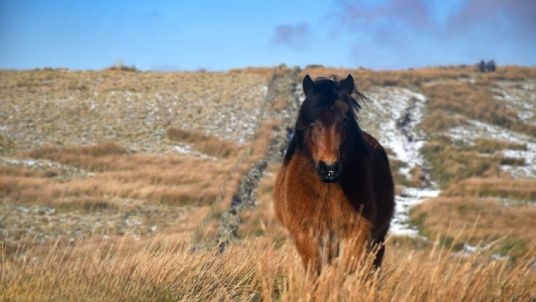
Horses are amazing – they have sleek summer coats and, in the winter, can grow a coat a bear would be proud of, but what is behind this incredible change?
It’s all down to day length. As the days get shorter after the summer solstice, this will trigger the horse into starting to shed the short summer coat and replace it with the winter coat. How much coat the horse grows depends on temperature. If they have experienced cold, wet weather, they will grow more coat. If they are kept stabled and rugged, they will make a shorter, finer coat. The winter coat is double layered, with a soft, dense undercoat for warmth and long guard hairs to shed water.
The horse can continue to grow winter coat until around the time of the winter solstice. After this time, if they get cold, they will be able to grow more guard hairs, also called cat hairs. These can be very obvious on clipped horses who may have become a bit chilly. The lengthening days will encourage the winter coat to start shedding. This can be hastened by leaving stable lights on until bedtime, but rugging without extra light, will actually delay the coat change.
Understand what is going on and you will be able to give your horse the best chance to thrive.
You may ask - 'when is best to clip my horse?' Traditionally, hunters had their last clip before Christmas, and this makes sense. They could look very smart for the prestigious Boxing Day Meet without in any way risking spoiling the next summer coat. A last clip in November for most horses will enable them with advantage to grow a small amount of coat. Horses in hard work but averse to clipping, can be managed to minimize the winter coat by rugging from August.
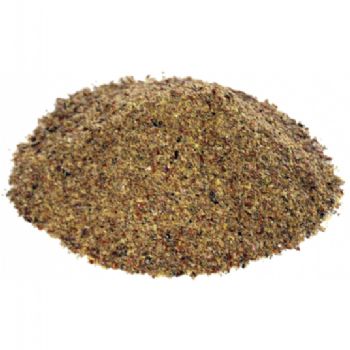
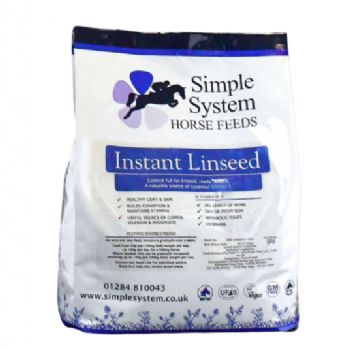
Growing a thick winter coat puts demands on the horse’s system, but it is an investment as once it has grown, the coat will be good insulation and protection against challenging weather. Out kept horses may need additional feeding in the autumn, not just to cope with the deteriorating weather but to fuel a good coat. Consider adding Instant Linseed to the diet as it has the ideal balance of omega oils to help soothe skin that may be itchy from coat growth, and to aid shine. For an average 500kg horse, add 125g per day to their existing feed.
It’s not a hardship to ensure horses with full coats are confined to steady work in winter, to avoid excessive sweating and the risk of getting cold. Ride these horses in the morning so they have all afternoon to dry off before the cold of the night.