FB Pixel

Latest News

Winter Feeding Tips

Our Director of Nutrition, Jane van Lennep BSc., MSc., BHSI (SM Cert)., NPSD., shares advice on how to feed your horse this winter.

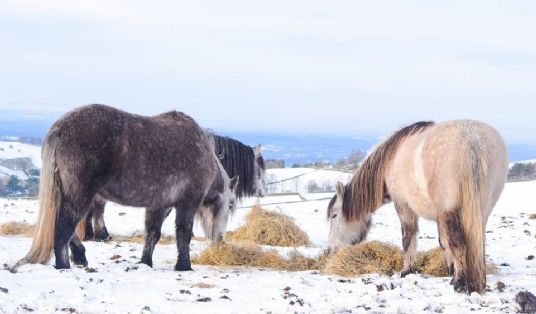
Forage first. Make sure your horse always has forage available to eat. Horses generate their heat through fermenting forages in the hindgut. By ensuring your horse has enough hay to eat, you will keep him warm in the coldest weather. Split hay rations into two or three piles spread evenly apart. Encouraging movement will keep your horse exercised, healthier and will help keep joints in good condition.

Split feeding times. Instead of feeding your horse once a day, try to split feeding times to two or even three times a day (if possible!). Horses are used to eating almost constantly.

Check water levels. Monitor your horse's water daily to ensure they are drinking enough and staying hydrated. Break ice on frozen water troughs (use a colander to sift out chunks of ice) and add in a little hot water to tempt your horse to drink. If your horse needs further encouragement still, adding a handful of TopGain , MetaSlim or Simple Balance + can work incredibly well. Soaked forages, such as our Blue Bag Grass Pellets, are a great way to hydrate your horse as well as giving them a nutritious feed. 
Managing the Cold Weather

Don't get caught out by this spell of cold and wet weather! When the temperature drops horses need more calories to keep warm and when it is wet as well, even more so. Add in a brisk wind and needs really go up.

Introducing HayCare

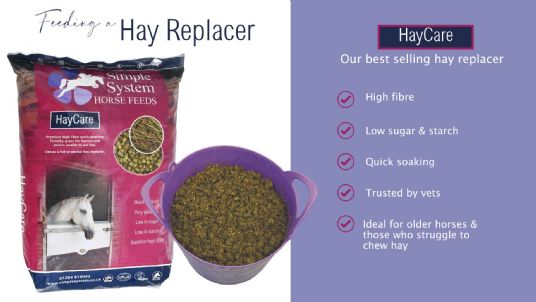
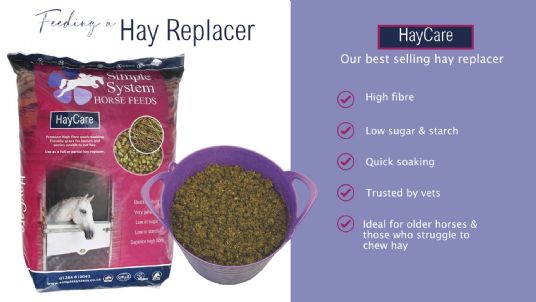
Introducing one of our best selling horse feeds, HayCare. A quick soaking hay replacer for horses who struggle to chew hay. 

Low in sugar, low in starch and high in fibre, HayCare is suitable as a hay replacer for older horses, those with poor dentition, laminitic horses and those prone to metabolic issues. HayCare is also frequently trusted by vets for use post colic, post surgery and post dental work.

HayCare is...

Our Best Hay Replacers for Horses

With both grass and hay in short supply, a lot of horse owners are looking for a suitable forage to replace hay & keep the horses ticking over until there is more grass and new hay.

Cheap feeds are not always economical, good quality always pays!

On our travels we have seen some hay and haylage made already which is encouraging, but it is best to wait at least 6 weeks before using it and bear in mind, when made in May or June, this could be very rich. It will be high in sugar and protein but relatively low in fibre, so not quite what we normally think of as hay. Ideal horse hay is first cut, made in July or even August, when fibre levels are higher and it is not too nutritious or heating.

So, until the next lot of suitable hay is around what are the alternatives?