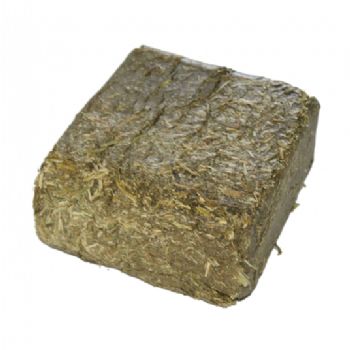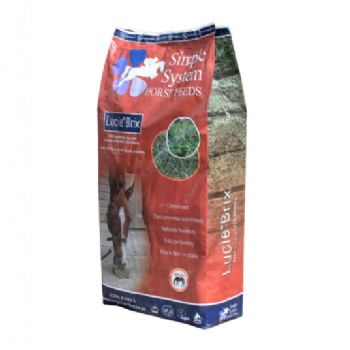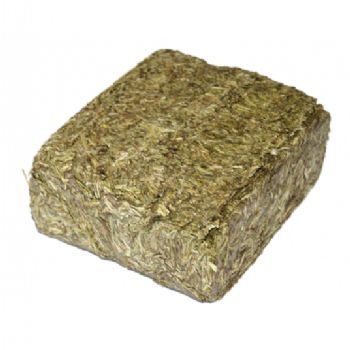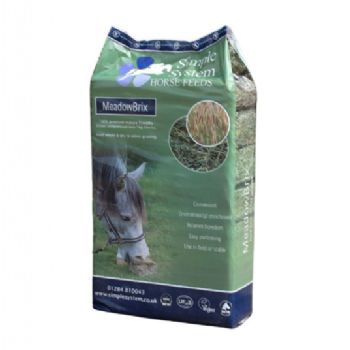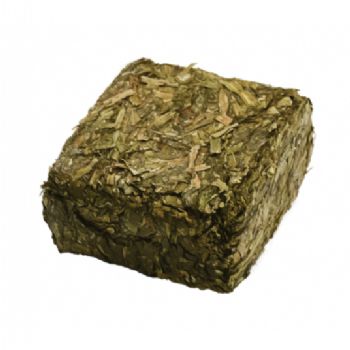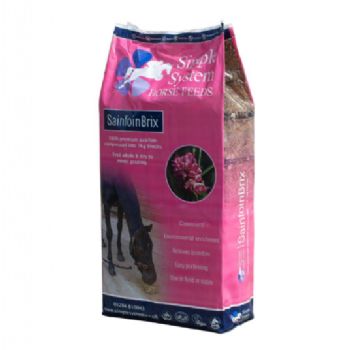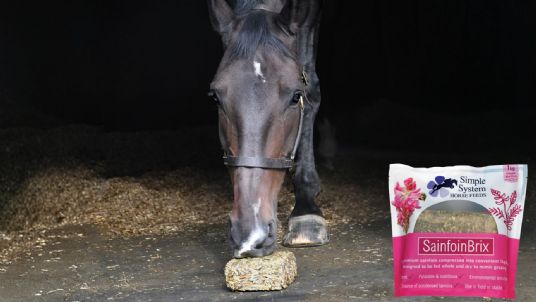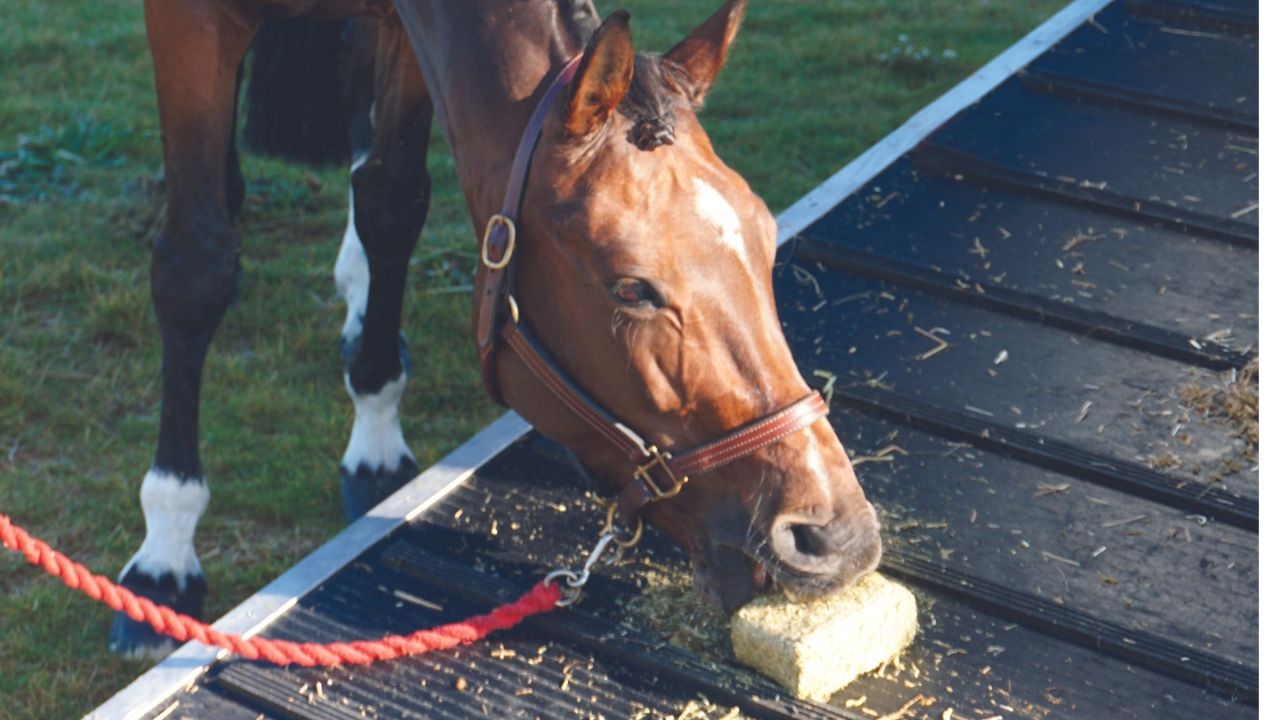
Forage Brix are an easy and convenient way to increase your horse's fibre intake either in the field, or stable. They are ideal for providing environmental enrichment, especially for those spending more time stabled due to inclement weather, wet muddy paddocks, or box rest.
Unsure of how to feed Brix? Read on for answers to our frequently asked questions or watch our short video.
FAQs
Q. Are Brix treats or can they be used every day?
A. Both! Some customers use Brix as an occasional treat, others use them as the daily portion of chop. They're also regularly used for enrichment purposes, often when horses need to be stabled more than usual, or when away at competitions. They make brilliant boredom busters.
_________________________________________________________________________________________________________
Q. Can I feed Brix instead of hay?
A. Yes. Brix can be used as a full or partial hay replacer. We typically suggest MeadowBrix to feed as hay blocks, as nutritionally they are the most similar. To find out which is best for your horse contact our Feed Line on 01728 604 008 or complete our online form.
________________________________________________________________________________________________________
Q. How do you feed Brix?
A. Brix are designed to be fed whole and dry to mimic the way your horse would naturally graze. Simply place Brix at ground level, either on the floor or in a feed bucket, in the field or stable - stand back and watch your horse enjoy!
________________________________________________________________________________________________________
Q. What are the ingredients?
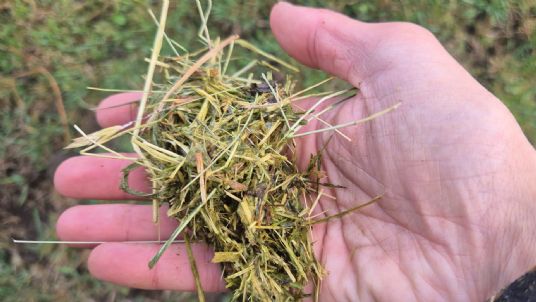
A. Simple System Brix are 100% straight forage with nothing at all added. Our Lucie Brix are 100% lucerne, MeadowBrix are 100% Timothy grass and Sainfoin Brix are 100% sainfoin. It's that simple!
________________________________________________________________________________________________________
Q. Are Brix suitable for older horses?
A. We don't recommend Brix for older horses as they require good teeth for chewing. You may wish to consider soaked pellets as an alternative to Brix for your older horses. HayCare is ideal for replacing hay and Sainfoin Pellets are excellent for adding variety to the diet.
________________________________________________________________________________________________________
Q. Where can I buy Brix?
A. Brix are available for delivery to your home or yard, or from your local retailer. They can be purchased as individual Brix (RRP £3.50) or in 20 Brix bags (RRP £22.95 to £26). Shop online here, or find your closest stockist here.
________________________________________________________________________________________________________
Still have questions? Our Feed Line equine nutrition team will be happy to answer them. Please call us on 01728 604 008.