Managing Grazing: The Spring Flush
Spring and periods of rapid growth can significantly alter the nutrient profile of pasture. Here are some practical strategies to help manage the transition:
All horse owners know that water is an essential nutrient and that horses need constant, free access to it. However, we may often overlook why this is and whether water alone is enough to achieve optimal hydration.
Whilst our horses may seem pretty solid, they are actually around 60% water. This means a 500kg horse contains around 300 litres of water, which is found in their cells, around their cells, and making up aspects of every organ. Even bones, which we may think are dry, are in fact 40% water!
Water is used in nearly every bodily function as well, not just for hydration or cell structure. Water has roles to play as a transport medium in the blood, aiding gaseous exchange in the lungs, maintaining cognitive function and signal transfers in the brain, and aiding digestive function and the passage of feed. The list goes on and on – you name it, water is involved in some way!
Water requirements can vary by the time of year; obvious things like temperature and workload have an impact, but also the diet, as dry matter or, conversely, moisture content can vary so much in what they eat and affect how much they need to drink to compensate.
Hay is around 85% dry matter or just 15% water, whilst spring grazing can be the opposite, supplying just 15% dry matter and 85% water. How your horse is housed or managed can greatly impact their water requirements.
These major swings in dry matter or water provision in the diet are one reason management changes need to be made gradually. Suddenly changing from a high-moisture diet to a low-moisture diet, or vice versa, can greatly impact the passage rate of feed, digestive function in general, and dropping consistency, which in some sensitive horses may trigger discomfort or, at worst, colic.
To maintain water homeostasis (balance) in the body, a 500kg adult horse needs to consume around 20–50 litres per day, but electrolytes are also a vital part of whether our horses are truly hydrated.
Electrolytes are minerals and salts that aid muscle contraction and nerve signalling to allow movement, which also includes cardiovascular muscles and maintaining heart rate.
Electrolytes also play roles in water regulation within the body, urine output, and blood pH, though again, their uses far exceed those listed here.
Electrolytes are either charged positively (sodium, potassium, calcium, and magnesium) or negatively (chloride), with the two most important electrolytes being sodium and potassium. Their charge has an effect on acid balance in the body and supports optimal athletic function.
Horses have a maintenance requirement for these electrolytes as some losses occur through normal respiration and defecation, but increasing temperatures, workload, and sweating will increase requirements above maintenance and make supply in the diet necessary and important.
Many of these electrolytes are already abundant in a horse’s natural, forage-based diet – potassium and chloride are nearly always oversupplied by grass and hay alone, and legume forages (such as sainfoin and lucerne) are typically high in calcium.
The most important electrolyte that is often lacking in the equine diet is sodium.
Giving free access to a plain salt lick in the field, alongside fresh pasture and hay, will likely provide what a resting horse needs, as horses show good self-supplementation for achieving maintenance requirements.
Horses aren’t so good at increasing intake to match the requirements for higher levels of work, which is where adding additional sodium chloride or “salt” into their feed becomes important.
Whilst horses have a fluid, salt, and fuel “reservoir” in their hindgut which they will draw down on during work, electrolytes cannot be preloaded. It is important to ensure they have adequate salt on board before beginning work, but lost salts still need replenishing after work, travel, or on hot days – essentially after any periods of sweating.
Electrolytes are best topped up in soaked feed so that we are giving water at the same time. This also helps rehydrate horses who are reluctant to drink away from home by feeding fluid instead.
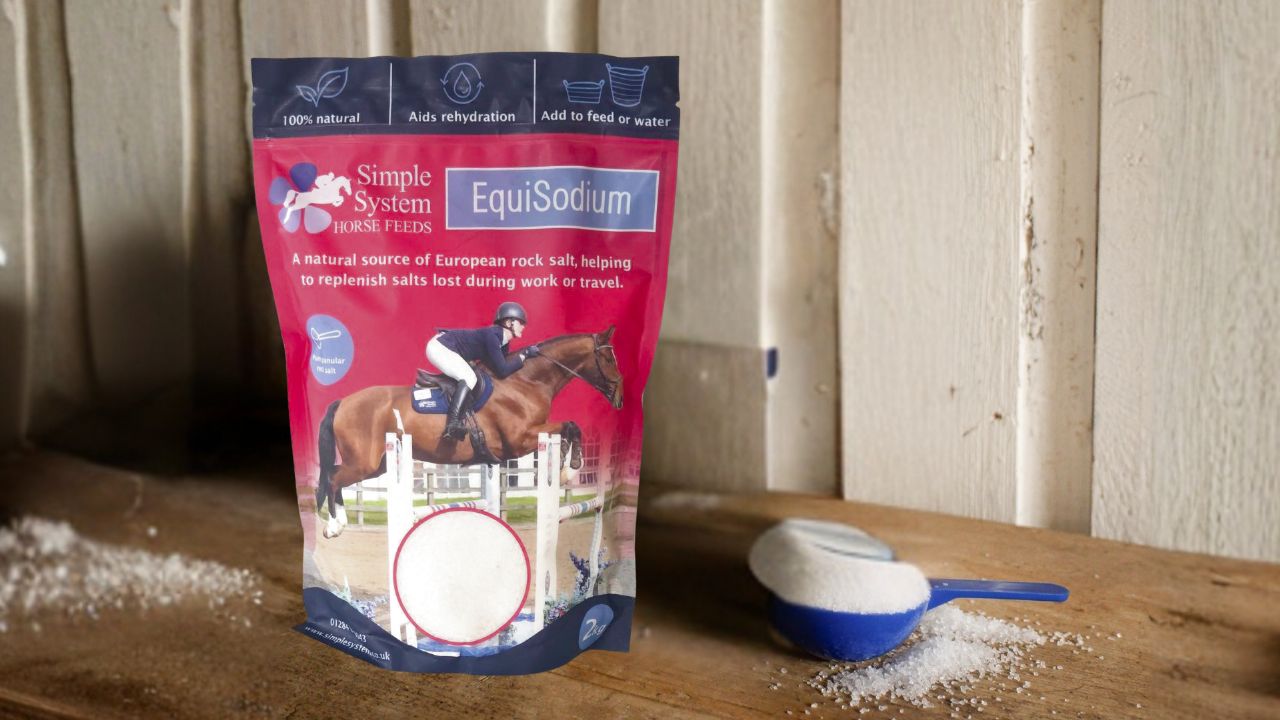
As a post-work feed, add a single measure (30g) of Summer Salt to 0.5kg of well-soaked Lucie Nuts to replenish the sodium, chloride, potassium, magnesium, and calcium lost during a few hours of light-to-medium work. Remember, “light work” covers horses in unaffiliated competition work, so many are not working as hard as you think!
You may also wish to add a measure of Summer Salt to the evening feed on a hot day if your horse has been sweating in the field, or after travel or stressful events that may cause a horse to sweat up.
It is important to remember that salt or electrolytes should not be given “dry” nor in a concentrated form, and you must ensure horses are drinking plain water adequately alongside.
Many of the electrolytes are hard to over-supplement, unless horses have restricted water intake or are not drinking enough.
Electrolyte pastes are generally best avoided unless given under the direction of a vet and, in some cases, have been found to increase the risk of gastric ulcers.
Many electrolyte supplements have a low feeding rate and don’t adequately top up the salts lost during work. They also often contain some form of sugar, dextrose, or glucose, as for a time, it was thought necessary to aid the absorption of salts. We now know that isn’t the case, making it an unnecessary filler.
Supplements in general are also more likely to contain other fillers, chemical additives, or preservatives; things we do not add or use here at Simple System.
Horses on forage-based diets are also already getting adequate levels of nearly all the necessary electrolytes, with sodium, in the form of natural rock salt, the only electrolyte that is likely to need topping up.
To discuss your horse’s electrolyte requirements, how to support higher levels of work, or aid recovery, please contact the Simple System Feed Line on 01728 604 008. Alternatively, contact the nutrition team by email to info@simplesystem.co.uk, or request a free Feed Plan by completing the online advice request form.
Spring and periods of rapid growth can significantly alter the nutrient profile of pasture. Here are some practical strategies to help manage the transition:
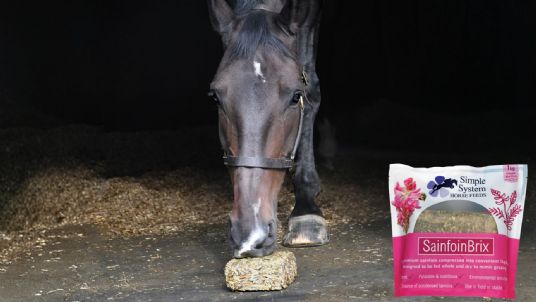
How does the horse's jaw work? What happens if horses eat above ground level? Read the article to learn more...
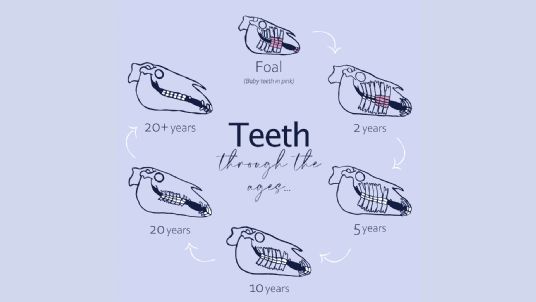
Horses’ teeth change throughout their lives - they are continually growing and continually wearing, as they chew and grind their grazing and forage.