As another year draws to a close, we are able to catch our breath following the Christmas rush and reflect on 2025.
Management, including feeding, can be very helpful in giving your horse the best chance of a comfortable life. Whatever the root cause, it will be exacerbated by inhaling any small particles, such as dust or spores.
Protein is essential for maintaining health and sustaining life, however, pretty useless to the horse. It is the amino acids or the “building blocks” of protein that are the important part.
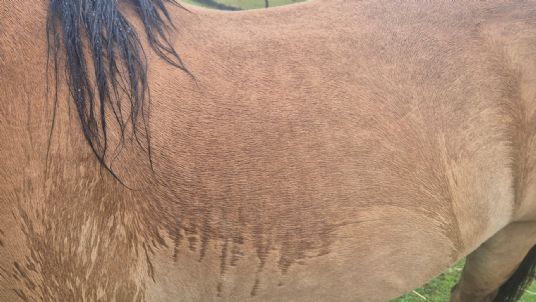
Horses are amazing – they have sleek summer coats and, in the winter, can grow a coat a bear would be proud of, but what is behind this incredible change?
In the wild, with unrestricted access to pasture, horses would spend the summer “stocking up” by eating nutritious grass - and plenty of it - to aid them in building a thick coat and laying down excess weight, even fat pads, to sustain them through the winter.
What do we mean by the term ‘equine microbiome’? Our horse’s digestive tract is home to a vast ecosystem made up of trillions of microorganisms; bacteria, fungi, viruses, archaea and protozoa which we collectively refer to as the microbiome.
Fibre — and a good variety of it — is essential for all equines, especially donkeys, who have evolved in harsh, arid conditions with little lush vegetation.
As our growers shut down their dryers for winter, we’re able to review what has been another challenging year for forage production.
''Please hold their breakfast - I'll be riding this morning''
It is commonplace for many yards to see variations of this message daily due to the traditional rule of feeding horses...
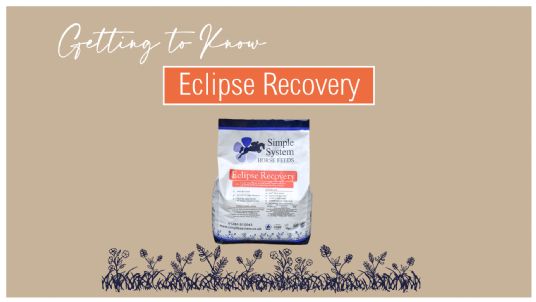
A perhaps lesser-known product in our range is the humble Eclipse Recovery - a naturally concentrated tonic feed that provides a powerful support package for our horse’s digestive tract and immune system.
To rug, or not to rug? A question horse owners have been asking for many years! Here is some useful guidance to help you consider your horse's individual needs this winter.
Simple System Horse Feeds will be operating as usual for much of the festive season. This includes our van delivery service.
We will however be closed on the following dates...
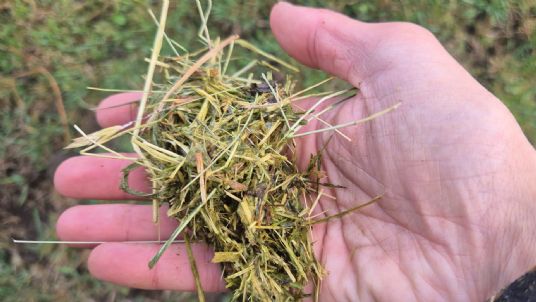
Quidding is a term used to describe when a horse drops 'balls' of partially masticated (chewed) long stem forage, although they can also quid chops / chaffs and even feed.
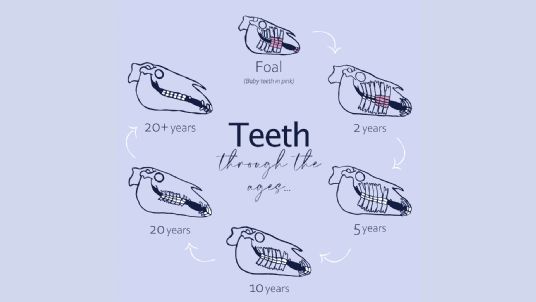
Horses’ teeth change throughout their lives - they are continually growing and continually wearing, as they chew and grind their grazing and forage.
Grass has the potential to grow all year, which is different from many other plants. Certain things are necessary for this growth, but if they are not met, the grass will be dormant, waiting for conditions to improve.
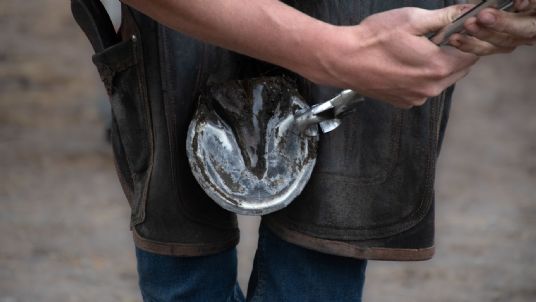
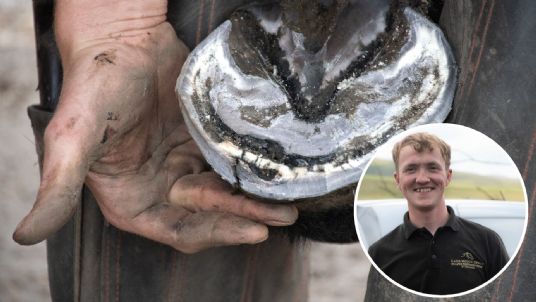
In the equestrian world there may be no truer phrase than ‘‘no foot, no horse’’.
To help our horses stay foot sound this winter, we quizzed farrier, Kaine Seddon DipWCF.
Many livery yards make adjustments to their daily routines when the clocks change at the end of October, when those wintery nights really start to draw in. It is important for the horse's digestive health and their mental well-being that any changes are made gradually - over the course of a week or more.
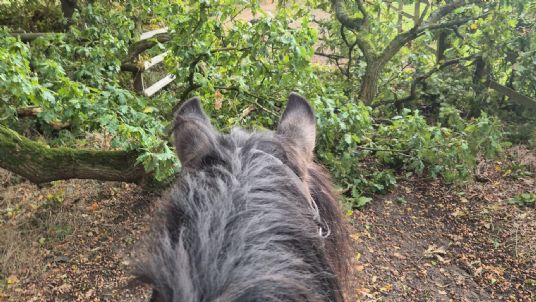
Storm Amy made quite a mark over the weekend. We hope your horses stayed safe and well. Whilst there has been some obvious damage, please check your fields thoroughly if you haven't already as there may be a less obvious concern.
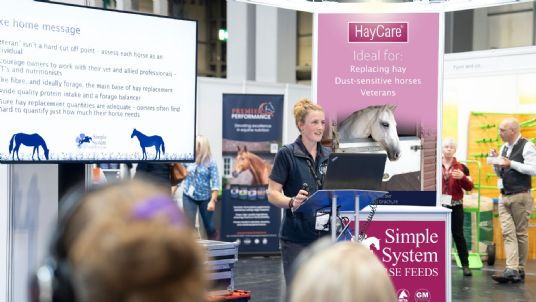
Track systems are growing in popularity and are cited as one of the most commonly used alternative management systems of equines in the UK. We were lucky enough to be present at The British Equestrian Veterinary (BEVA) Congress 2025 to catch up on the latest research and opinion on their use.
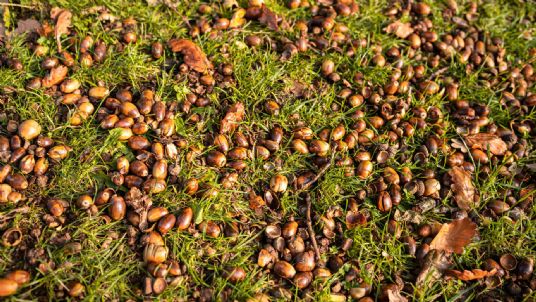
Every few years, nature produces an abundance of fruits, nuts and seeds. This is called a mast year and this year, 2025, is one.
Mares are seasonally polyoestrous which means that they have multiple reproductive cycles during spring and summer. Generally, mares will stop coming in season once the weather gets cooler, the grass declines and the days are shorter.
Introducing Stud Balance +, a specialist forage balancer providing optimal nutritional support for broodmares, stallions and growing youngstock.
At Simple System we are always keen to expand our knowledge so we last week we attended the 3 day BEVA - The British Equine Veterinary Association Congress in Birmingham.
With forage yields reported to be down by up to 50% this year, hay may well be in short supply this winter.
Protein. We should never underestimate the importance of this vital nutrient. It’s essential for muscle, skin, bones, internal organs, blood – just about any part of you or your horse needs protein!
Simple System Horse Feeds are thrilled to be finalists two of the most coveted awards in the equestrian industry this year.
2025 has been a particularly challenging year for farmers and many of us are aware there is likely to be a hay shortage as yields have been markedly down due to the prolonged hot and dry summer.
With all the warm and dry weather we have had, it is hard to remember that we are fast approaching autumn. The horses are getting their “blackberry” coats.
Nutritional wisdom could be summed up as knowing what you need to eat, and eating it. This might be the basic needs of nutrition in terms of calories, protein and so on, or it could be knowing what is needed to support good health.
This is common Birdsfoot trefoil, although it is sometimes referred to as 'eggs and bacon'. It's an attractive wildflower, native to the UK, and one that can be of benefit to horses...
We do bang on about ragwort! It is an excellent plant for pollinators and the main food source for the caterpillars of the cardinal moth. It has a long flowering period, which means it is supplies nectar for a lot of insects, for a long time. Although it is poisonous, it is not palatable, so why are horse owners so keen to get rid of it from their pastures?
We are increasingly aware that ultra processed food is bad for us and that we should eat seasonal, fresh and local food. But what about our horses? They too will have reduced health when they have ultra processed food.
Owners of metabolic horses and ponies (those with EMS, IR, ID or PPID]) and those prone to laminitis, are well versed in keeping the diet low in sugar and starch. Most will work towards a cut off of 10% combined sugar and starch, often referred to as the Non-Structural Carbohydrate or NSC level.
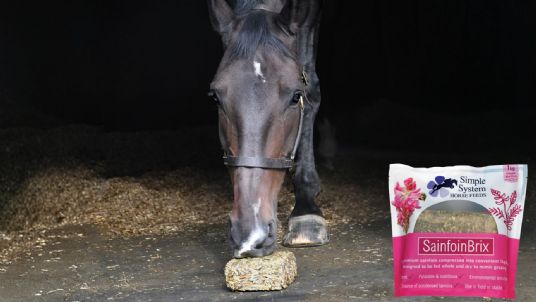
We are frequently asked, “What is Sainfoin?’ - whether it be out of interest’s sake, having come across it on our website, heard it mentioned on BBC Countryfile, or whether it has been specifically recommended for your horse. Sainfoin offers a wealth of benefits and is a unique forage type we are very proud to champion here at Simple System.
Rain coming after a prolonged dry spell can be a shock, welcome or otherwise. The grass will readily welcome the rain and with decent rainfall, the grass reawakens and begins to grow again – sometimes very rapidly.
Long, hot, dry weather may be wonderful for us during our leisure time, but the driest spring on record has had some serious implications for all connected with the land - including our horses. The dry spell looks likely to continue into drought. Read on to see how you can help manage your horse during this time.
For the second consecutive Sunday, presenter Adam Henson has discussed the use of sainfoin during Countryfile. Those that know Simple System well, know that sainfoin is one of our favourite forages for horses - and that we offer an extensive range of sainfoin feeds.